A single data center can consume as much electricity as a small city. So it makes sense that families across the country are worried that their utility bills might go up if a data center comes to their community, or that they will be forced to subsidize infrastructure built for some of the world’s largest corporations run by the world’s richest men.
Politicians on both sides of the aisle are capitalizing on these anxieties ahead of the midterm elections, using data centers as a rhetorical device in their campaign fight around affordability. Some are even calling for a complete halt to the construction of new data centers. What they aren’t discussing is that more data centers don’t have to mean higher utility bills.
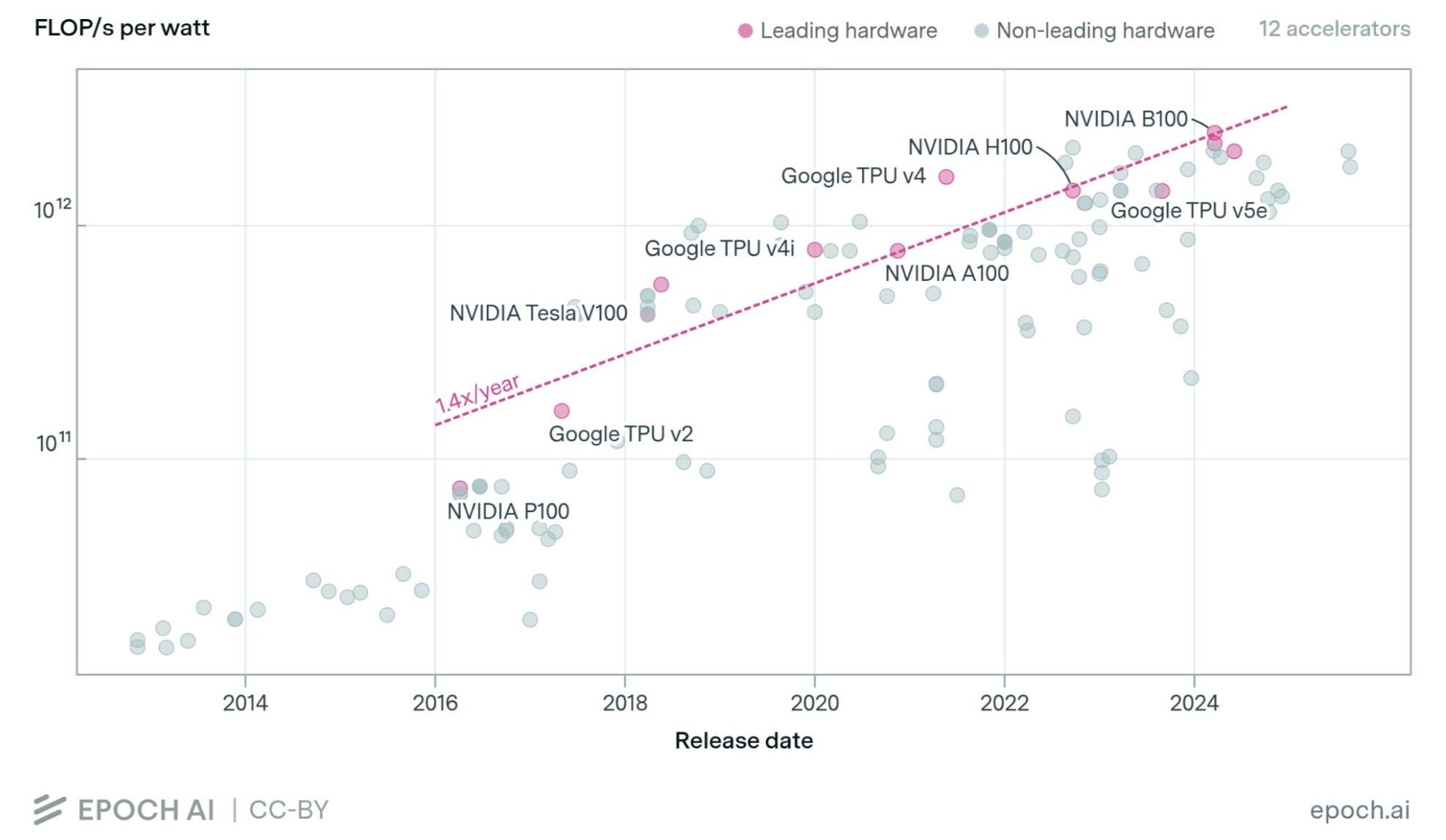
Data center demand can actually bring down the cost of electricity. Recent analysis by the Electric Power Research Institute found that data-center growth actually reduced average retail electricity rates in the U.S. between 2015 and 2024, and that the doubling of data-center capacity reduced residential rates by roughly 4%, likely due to economies of scale. PG&E estimates that every gigawatt of new data-center demand could reduce average household bills up to 2%.
It just depends on how policies are written and enforced. If laws are written to ensure the largest utility customers pay for their costs, while also giving them greater freedom to bring their own power, use electricity flexibly, and invest in new grid capacity, data-center growth can be a net positive for all ratepayers.
One way that can happen is if policymakers step in and direct the influx of private cash from data centers to help dilute utility companies’ massive overhead costs—things like poles and wires.
But companies are also increasingly trying to create their own power by building or paying for the electricity generation, batteries, and other equipment needed to serve their facilities rather than relying on the existing grid to provide everything. Done right, these projects can keep the cost of serving enormous new electricity demand off other customers’ bills while also providing reliable power for the data center.
In Nevada, Google worked with NV Energy, the state’s primary electric utility, to support the development of 115 megawatts of enhanced geothermal generation. Google pays the additional cost associated with the emerging technology rather than passing that premium to other NV Energy’s customers. The arrangement gives an innovative, round-the-clock energy resource a credit-worthy customer and a pathway into a regulated electricity market.
Meta likewise signed a 20-year agreement with Constellation Energy, one of the nation’s largest nuclear power operators, to support the continued operation of a nuclear plant in Illinois after its state subsidy expires next year. The agreement also supports a 30-megawatt increase in the plant’s output.
These sorts of partnerships provide a model that can extend beyond data centers to semiconductor plants, advanced manufacturing facilities, military installations, hospitals, telecommunications systems, and other facilities essential to national and economic security. Last year, West Virginia created a microgrid development program that allows large projects to develop dedicated power generation and distribution systems outside the normal utility system. It’s just one state-level example of creating a legal pathway for large projects to develop independently powered campuses.
Finally, data-center growth can force utilities and regulators to discover ways to get more out of the grid we already have, helping meet growing demand without immediately asking ratepayers to finance expensive new construction. Indiana enacted legislation last year that requires regulators to study technologies that might allow existing power lines to safely carry more electricity. These technologies can increase the capacity of existing transmission corridors more quickly and often at lower cost than constructing entirely new lines.
More states should do the same—quickly. Otherwise, prices will go up.
Virginia’s legislative watchdog, the Joint Legislative Audit and Review Commission, has estimated that without proper planning and protections for existing customers, infrastructure needed to serve data centers could add $14 to $37 a month to the typical Virginian’s electric bill by 2040.
The urgency can benefit everyone. With the right rules, data centers can be more than a new source of electricity demand—they can help deliver more power, a stronger grid, and more affordable electricity for everyone.
Data center demand can actually bring down the cost of electricity. Recent analysis by the Electric Power Research Institute found that data-center growth actually reduced average retail electricity rates in the U.S. between 2015 and 2024, and that the doubling of data-center capacity reduced residential rates by roughly 4%, likely due to economies of scale. PG&E estimates that every gigawatt of new data-center demand could reduce average household bills up to 2%.
category
Op-eds
social_image
article
false
include_in_hero_section
false
topic
Energy
Technology
evergy_subtopic
Electricity
technology_subtopic
Artificial intelligence
article_view
article content only
hide_from_our_work
false
Article
The New York Times v. OpenAI, and the Limits of Copyright
Every time I play a gig, someone tells me that I remind them of James Taylor or Paul Simon. Now depending on how you feel about their music, that’s either me bragging or something I should have kept to myself.
Either way, there’s a reason that I sound like them.
For decades, I have listened to their songs and tried to play along. You hear them in me because they’ve had a huge influence on me. That’s how creativity works. Every artist absorbs the sounds around them and creates their own remix. Led Zeppelin drew heavily from the blues, Prince carried traces of Jimi Hendrix, and The Weeknd evokes Michael Jackson.
This creates an important tension for copyright. Artists understandably want to protect their compositions and performances from unauthorized copying. But influence, imitation, and recombination are also fundamental to how artists learn and create. There is a fine line between protecting expression and empowering it. If copyright reaches too far, we begin to wall off the raw materials of creativity.
That tension is one reason The New York Times litigation against OpenAI and Microsoft matters to me, and I think OpenAI and Microsoft have the stronger argument.
Enter the Machine
In the case, The New York Times and other plaintiffs argue that OpenAI and Microsoft used copyrighted works to train AI models without permission and that those uses are not protected by “fair use.”
Fair use is basically the part of copyright law that sometimes allows someone to use copyrighted material without permission. Courts look at several factors, including whether the new use serves a different, transformative purpose and whether it harms the market for the original work.
There are several questions in the case but the one I’m most interested in is whether training an AI model is more like reproducing protected expression or more like analyzing works to learn patterns and relationships for a different purpose.
Why the interest? Let’s return to the local club and our singer/songwriter: me.
I’ve spent decades learning from copyrighted works to develop my own style and music. I’ve absorbed patterns, techniques, phrasing, chord changes, and countless other influences. What comes out sounds like other artists, but it isn’t them. I’ve transformed their influences into something new.
Copyright law traditionally allows this. It protects an artist’s expression against copying, but does not protect their style, genre, or techniques against copying. I can’t appropriate James Taylor’s protected expression, but I can mimic or echo the way that James Taylor plays and sings.
But what about an AI model?
The Scale Problem
A model can analyze existing works to learn patterns and relationships then use those patterns to generate new expressions. Unlike me, however, it can do that at an enormous scale, producing a huge quantity of content with a much greater potential to compete with the works from which it learned.
That’s an important difference in scale, but does it change what belongs to copyright?
The Recording Industry Association of America (RIAA) says yes, that scale does matter. In their amicus brief in the case, they argue that these AI models aren’t merely analyzing music. They are built to generate new music that “serves a purpose akin to that of the original work.” And because they can generate enormous quantities of competing music, they can substitute for existing works and harm their markets.
In other words, the RIAA argues that because training enables a model to generate an enormous, competitive catalog of James-Taylor-like songs, training on James Taylor’s copyrighted works should not be treated as fair use.
Notice the shift in the market-harm argument. It’s not that the new songs necessarily copy James Taylor’s protected expression. It’s that they can compete with him because they draw on similar styles and influences.
Human creators do that constantly. We learn from existing culture, create new works in the same styles, and compete with the artists who influenced us. Copyright does not normally protect an artist from that kind of non-infringing competition.
AI changes the scale dramatically. But if scale turns competition from new, non-infringing works into copyright harm, we risk giving copyright owners indirect control over the styles, genres, techniques, and influences that individual creators have always been free to learn from.
Drawing the Copyright Line
That is why the Abundance Institute joined a different amicus brief, filed by the Chamber of Progress in support of OpenAI’s argument that using copyrighted works to train AI models can qualify as fair use.
The brief argues that learning from a work is different from reproducing it. As evidence, it looks to another court case, Authors Guild v. Google.
Google copied millions of books, but not so people could read those copies instead of buying the books. It used them to make the books searchable and to extract information from the text. The court found that use was transformative.
The Chamber argues that AI training can work in a similar way. The copyrighted works are not being used simply to republish their expression; they are being analyzed to identify patterns and relationships that help build a new tool.
That is the line we signed on to defend: protect the work without turning copyright into control over what future creators can learn from, or making the tools they create with unnecessarily harder to build.
More Tools, More Creators
The RIAA and other music-industry groups’ frame their argument around copyright’s purpose “to encourage humans to produce creative works for the public’s benefit.” But what actually helps people create? Is it just more copyright or something else?
Too often, we focus on protecting creators by maximizing their control over what they have already made. But creators are also trying to make what comes next. To do that they need at least two things: access to the raw materials of creativity (influences, styles, genres, techniques) and access to the tools that let them do something with those materials (instruments, recording technology, software).
We’ve explored the importance of the raw materials, but what about the tools?
History repeatedly shows that making creative tools more accessible can widen creative participation. Magnetic tape allowed creators to build music at home. Even the karaoke machine, in automating accompaniment, transformed millions of passive listeners into active performers.
The tools also expand what each creator is capable of producing. Every week, I speak with artists who are using AI tools to grow creative possibilities. They experiment with music arrangements, separate stems for production, communicate ideas with human collaborators, and prototype projects they could not otherwise afford. In each case, these tools expand what a creator can do while retaining human judgment at the center of what gets made.
But the availability and capability of these new tools depend on the rules governing training. If developers must secure permission across enormous training datasets, the cost and difficulty of building new models and creative tools rises, especially for smaller entrants.
So if the goal is more creativity, protecting creators cannot mean only protecting what already exists. It also means preserving access to the raw materials and tools from which the next work will come.
Back to the Gig
Copyright protections may create incentives to produce new work. But extending those protections too far can also restrict the raw materials creators rely on and increase barriers to the tools they create with.
I’ve got another gig coming up, and I’m looking forward to the person who tells me who I sound like. And I hope that future creators have the same freedom: to absorb what came before, use the tools available to them, and make something new.
"Copyright protections may create incentives to produce new work. But extending those protections too far can also restrict the raw materials creators rely on and increase barriers to the tools they create with. I’ve got another gig coming up, and I’m looking forward to the person who tells me who I sound like. And I hope that future creators have the same freedom: to absorb what came before, use the tools available to them, and make something new."
Artifical Intelligence is here and everywhere. That includes the nonprofit and philanthropic worlds. In this episode, Chris Koopman of the Abundance Institute offers us a perspective on the problems with the pessimism that is seemingly everywhere, how AI is uprooting old ideas, whether AI is a new Renaissance or a new Industrial Revolution, why everyone hates data centers now, the many ways public policy philanthropy intersects with AI, and how nonprofits should think about protecting themselves in this new era.
Our CEO Christopher Koopman discusses the problems with the pessimism that is seemingly everywhere, how AI is uprooting old ideas, whether AI is a new Renaissance or a new Industrial Revolution, why everyone hates data centers now, the many ways public policy philanthropy intersects with AI, and how nonprofits should think about protecting themselves in this new era.
Holden Hughes is an Operations Associate at the Abundance Institute, where he supports the organization’s mission to create an environment where emerging technologies can develop and thrive. Holden hopes the future holds more opportunity for each generation than the last, through technological advancements.
He developed a passion for public policy while interning in a congressional office in Washington, D.C. His experience in government sparked an interest in the intersection of public policy and technology. Holden graduated from Utah State University with a bachelor’s degree in Communication Studies and a certificate in Conflict Management and Facilitation.
Enough was enough. The nation had to be warned of the danger crouching at its doorstep.
It was 1982 and a few of Hollywood’s finest, including Clint Eastwood, appeared before a congressional subcommittee. They had come to warn of a new technology that, as one explained, posed as great a threat to the American public “as the Boston strangler is to the woman home alone.”
It was a “great tidal wave” that would crash on the American film industry, causing it to “bleed and bleed and hemorrhage.”
What could possibly wreak such havoc? Jack Valenti, president of the Motion Picture Association of America explained, it was “the video cassette recorder and its necessary companion called the blank tape.”
As he shared stats on the growing popularity among families to record television shows and then skip the commercials, he noted in passing that his family had their own collection of tapes.
Representative Kastenmeier interrupted, “Do you consider yourself and your family infringers when you engage in that practice?”
Valenti dodged the question, explaining that the studios did not intend to prosecute consumers for recording at home.
Kastenmeier interrupted again, “That wasn’t my question.”
Yes, Valenti confessed, “I am taking somebody else’s copyrighted material without their consent and I know damn well I am infringing.”
The very technology that Valenti feared, he already found irresistible.
A Very Happy Birthday
Like Valenti’s family, I also found this technology irresistible. I still remember my seventh birthday party, also in 1982. My mom rented a VCR and a cassette of Disney’s Swiss Family Robinson. It was earth-shattering. I could watch the movie that I chose, whenever I wanted, and as many times as I wanted… until we had to return the VCR the next day.
Today, with the near-infinite control over programming that we have, it seems absurd that I was so elated over such little choice. But at the time, the broadcasters were in charge, not the audience. The VCR flipped the script a bit, and I loved it.
Hollywood… did not love it as much.
As Valenti explained, the average cost to make a film was $20 million and eight out of ten movies did not recoup the costs in theaters. This was a risky business and the VCR threatened to erode the aftermarket sales and licensing revenues. It also could eliminate the value in running commercials if viewers could just skip them.
Valenti’s solution was for Congress to recognize the rights of the “creative property owners” and provide the studios a portion of the royalties from the sales of VCRs and blank tapes. Consumers could enjoy this new found freedom and copyright holders could be compensated.
Hollywood vs. Sony
Valenti was not the first to defend the film industry against this new threat. A few years before, in 1976, Universal City Studios and Walt Disney Productions sued Sony, the manufacturer of the Betamax videocassette recorder. They argued that Sony produced a technology used to reproduce their copyrighted material without permission.
The case eventually landed in the U.S. Supreme Court in 1984, and Sony won, on a 5-4 decision. The reasons boiled down to the idea that a manufacturer of a technology with substantial legitimate uses shouldn’t automatically be punished because someone uses it unlawfully. And, recording a program to watch it later was just “time-shifting,” which qualified as “fair use.”
In addition, the majority opinion noted that there wasn’t sufficient evidence of market harm and that there could actually be a silver lining. More people might watch a broadcast because now they could record it to watch later, which could increase the value of the rerun rights.
Meanwhile, as the judges deliberated in the court, entrepreneurs were experimenting in the market.
The Rise of the Video Stores
The same year that Universal and Disney sued Sony, Andre Blay, a servicer of video equipment in Michigan, had an idea. He reached out to studios inquiring about selling their movies on videocassettes. An executive at Fox, Steven Roberts, was intrigued by the idea and made a deal.
Blay launched the Video Club of America to sell the tapes, which he hadn’t produced yet, and 9,000 people joined. Consumers were eager to own their favorite films, one veterinarian from North Carolina called immediately, provided his credit card information, and ordered all 50 titles at $50 each. Blay was on to something.
His partnership with Fox caught the attention of another entrepreneur, George Atkinson. He was struggling with a small business renting out super 8 projectors and screens for home parties. If people would rent a projector, perhaps they would rent a cassette tape, he thought. Others disagreed, noting “that Americans are not a renting public…” Atkinson would prove them wrong.
He purchased one Beta and one VHS copy of the 50 titles available. Then he opened a video-rental business in Los Angeles in 1977. Now, movie lovers could join his rental club and take home a movie they wanted at a fraction of the cost to own it. And they did.
Over the next year, the price of a VCR dropped below $1,000 and by the end of 1978 Blay’s company, Magnetic Video, had sold a quarter of a million cassettes and Atkinson was franchising rental stores across the country.
But this new business model troubled Valenti and the studios. Under the “first-sale doctrine,” a store could purchase a cassette once and rent it hundreds of times without paying the copyright owner another dime. The rentals were perfectly legal, but Hollywood wanted a share of the growing business. It was one more reason Valenti turned to Congress in 1982, warning that the VCR threatened the future of American filmmaking.
The Displacive Fallacy
Three years after Valenti’s testimony, Hollywood was back in Washington D.C., not to control the VCR market, but to wine and dine it.
Disney and Paramount hosted lavish lunches and concerts for some 6,000 video dealers. And with good reason. In 1985, consumer spending on videocassette sales and rentals was approaching theatrical box office receipts, around $3.5 billion. The VCR had created an enormous new business, and movie theaters weren’t going anywhere.
By 1987, even Valenti had changed his tune. Speaking to the Video Software Dealers Association, he acknowledged “once we were adversaries, now we are not.”
What had Hollywood missed?
Daniel Boorstin, then Librarian of Congress, had a name for it: the “displacive fallacy.” We tend to assume that each new technology will replace the old. Television will replace books, video will kill the radio star. But technological change isn’t necessarily a zero-sum contest. New technologies can create new opportunities for the old.
Hollywood wasn’t wrong to worry about copyright infringement or the erosion of its existing business. But its focus on what it might lose made it harder to appreciate what consumers and entrepreneurs might create.
For Valenti, the VCR threatened Hollywood’s control over its movies. For a seven-year-old boy, it meant getting to watch a movie he chose at his birthday party. For George Atkinson, it was an opportunity to build a business around that newfound freedom.
The VCR gave audiences more control, entrepreneurs new opportunities, and Hollywood an entirely new market. It turns out the VCR wasn’t a strangler after all. It was quite the opposite.
The VCR gave audiences more control, entrepreneurs new opportunities, and Hollywood an entirely new market. It turns out the VCR wasn’t a strangler after all. It was quite the opposite.
topic
Creative Frontiers
technology_subtopic
—
social_image
article
false
include_in_hero_section
false
category
Articles
article_view
article content only
hide_from_our_work
false
Article
Free-Market Coalition’s Data Center Principles Call for Digital Abundance, Protecting Resource and Ratepayers
From e-commerce to cloud computing, artificial intelligence to remote work, the modern world is increasingly digital and dependent on data centers, the physical foundation of the 21st Century economy. As communities grapple with building out this vital infrastructure, a coalition of organizations dedicated to limited government and protecting the free market has issued a statement of principles to ensure that the United States continues to lead the world on data center infrastructure.
The coalition of the Goldwater Institute, the Abundance Institute, the Pacific Legal Foundation, and the Taxpayers Protection Alliance—with foundational research input from the James Madison Institute—is urging legislators to enact policies that ensure technological growth is driven by free markets rather than bureaucratic mandates, while preserving individual rights, rewarding private initiative, and protecting ratepayers.
The following seven principles start from a default policy posture of enabling data center infrastructure to grow:
Data centers are critical technology infrastructure that support an ecosystem of economic activity. We reject arbitrary bans, emergency moratoria, and discriminatory prohibitions on data center development, which raise costs and harm American technological leadership and national security.
Data centers are already essential infrastructure for AI, cloud computing, and the modern world. As demand grows, US firms must be free to expand capacity to host the infrastructure underpinning the next generation of services.
Property rights must be respected and the policy environment must be predictable. Data centers should be afforded the same legal certainties as traditional commerce. They should also be classified and treated consistently with comparable industrial or commercial uses, and governed by objective standards rather than retroactive or discriminatory permitting imposed under pressure.
Energy abundance and market access to power must be prioritized. AI and the digital economy require the nation’s energy capacity to grow, which is why we support a framework that values energy abundance, empowers consumer choice, protects property rights, and allows market forces to shape the energy landscape.
Fiscal integrity must be maintained and general ratepayers must be protected. Data centers should be neither privileged nor punished by the communities that host them. They should operate under rules that ensure their extraordinary new electric load is not shifted to households and existing businesses.
Water stewardship must be prioritized through evidence-based permitting. Responsible water use is fully compatible with data center growth. Under existing permitting processes, applicants can be required to demonstrate no harm to the watershed or to neighboring wells before a permit is issued.
The right to innovate and to cloud compute must be respected. With the rapid evolution of AI and high-performance computing, policy frameworks should favor experimentation over prohibition and flexibility over static assumptions about how data centers operate today.
Data centers are as important today as previous innovations in telephones, broadband, and power plants were to prior generations. The builders of this modern-day infrastructure deserve the same freedom to respond to market signals to enable broad economic participation and national competitiveness.
The digital future is going to be built somewhere. By sticking to a free-market framework that rewards private initiative and protects individual rights and ratepayers, U.S. leaders can ensure it is built right here.
Click here to read the full Digital Infrastructure Ratepayer and Resource Protection Accord.
Data centers are as important today as previous innovations in telephones, broadband, and power plants were to prior generations. The builders of this modern-day infrastructure deserve the same freedom to respond to market signals to enable broad economic participation and national competitiveness.
We, the undersigned organizations, urge Congress to promptly consider and pass S. 5653, the Bipartisan American Affordability and Jobs Act (BAAJA) of 2026. As organizations committed to free markets, property rights, and energy abundance, we believe BAAJA represents a critical opportunity to modernize the federal permitting system and ensure America can build the infrastructure necessary to meet the demands of the 21st century.
For too long, energy projects and critical infrastructure have been delayed or blocked by a costly, unpredictable federal permitting system in desperate need of reform. As a result of our broken federal permitting process, it takes an average of 29 years to develop and permit a new mine in the United States, the second-longest timeline in the world. These delays prevent critical projects from moving forward, drive up costs for consumers, undermine American competitiveness, and constrain our ability to develop the energy and natural resources essential to our economic future.
BAAJA directly addresses these challenges through several key reforms to the federal permitting process, including:
Streamlining the National Environmental Policy Act (NEPA): Reaffirming NEPA’s procedural role, establishing additional guardrails for standing, shortening the statute of limitations to 150 days to provide greater certainty, and reforming judicial remedies to allow remand without vacatur for NEPA violations.
Reforming the Clean Water Act (CWA): Promoting regulatory certainty by refocusing Section 401 certifications on water quality and ending preemptive and retroactive vetoes under the EPA Administrator’s Section 404(c) authority.
Modernizing the Endangered Species Act (ESA): Providing states with greater flexibility to conduct Section 7 consultations and ensuring ESA determinations are grounded in the best available science.
Advancing complementary permitting reforms: Reforming transmission policy to ensure the electric grid can meet growing demand, streamlining the National Historic Preservation Act (NHPA), unlocking America’s geothermal energy potential, and providing greater certainty in the mining permitting process.
Taken together, these reforms would represent the most significant modernization of the federal permitting system in a generation. By reducing unnecessary delays, increasing regulatory certainty, and removing barriers to responsible development, BAAJA would help lower costs for Americans, strengthen domestic energy production, and support the infrastructure and industries that drive economic growth.
Congress has an opportunity to deliver meaningful, bipartisan permitting reform. We urge you to seize this moment and advance BAAJA without delay to protect property rights, promote energy abundance, and restore America’s ability to build.
Sincerely,
James L. Martin Founder/Chairman 60 Plus Association
Taylor Barkley Director of Federal Government Affairs Abundance Institute
Chris Barnard President ACC Action
Tim Chapman President Advancing American Freedom
Saulius “Saul” Anuzis President American Association of Senior Citizens
Phil Kerpen President American Commitment
David Ibsen Executive Director Americans for Free Markets
Brent Gardner Chief Government Affairs Officer Americans for Prosperity
Rea Hederman Executive Director of the Economic Research Center and Vice President of Policy The Buckeye Institute
Nick Loris President C3 Solutions
Lance Christensen Vice President of Government Affairs California Policy Center
Ryan Ellis President Center for a Free Economy
Darren Nelson Policy Fellow, Energy & Natural Resources Center of the American Experiment
James Dozier Founding President & Board Chair Citizens for Responsible Energy Solutions
Jeremy Harrell CEO ClearPath Action
Andrew J. Lewis President & CEO Commonwealth Foundation
John Vick Executive Director Concerned Veterans for America
Jason Solomon Head of Policy and Government Affairs ConservAmerica
Craig Richardson President Energy & Environment Legal Institute (E&E Legal)
Emmet Penney Director of Energy and Infrastructure Foundation for American Innovation
Akash Chougule President Foundation for Research on Equal Opportunity (FREOPP)
Kendall Cotton President & CEO Frontier Institute
Caleb Taylor CEO Fulcrum Foundation
Brian Norman Director of State Affairs Goldwater Institute
Gabriella Hoffman Director of the Center for Energy and Conservation Independent Women’s Voice
Dr. Bob McClure President and CEO James Madison Institute
Annette Olson Chief Executive Officer The John K. MacIver Institute for Public Policy, Inc.
Seton Motley President Less Government
Jason Chipman Executive Director Libertas Institute
Pete Sepp President National Taxpayers Union
Shawn Regan Senior Fellow Manhattan Institute
Joe Luppino-Esposito Federal Policy Director Pacific Legal Foundation
Daniel J. Erspamer CEO Pelican Institute
Tom Opdyke Policy Director for Energy and Environment R Street Institute
Mike Stenhouse CEO Rhode Island Center for Freedom & Prosperity
James Enstrom President Scientific Integrity Institute
David Williams President Taxpayers Protection Alliance
Sandra Benitez Executive Director The LIBRE Initiative
As organizations committed to free markets, property rights, and energy abundance, we believe BAAJA represents a critical opportunity to modernize the federal permitting system and ensure America can build the infrastructure necessary to meet the demands of the 21st century.
category
Articles
social_image
article
false
include_in_hero_section
false
topic
Energy
evergy_subtopic
Permitting
article_view
article content only
hide_from_our_work
false
Article
Sam Altman says we need another Renaissance. But we really need another Industrial Revolution.
Sam Altman doesn’t understand history. His mistake is going to punish the world.
That’s the depressing takeaway from the OpenAI’s CEO’s September 23rd speech to the United Nations. He came out swinging, saying that “we,” as in humanity, “have a choice in front of us.” AI, he said, “can either be more like a new Renaissance of creativity and discovery, or more like a new Industrial Revolution of upheaval and disarray.” He ended by calling for international “cooperation” and “standards.” In short, an AI regulatory regime that brings us to the promised land of another Renaissance instead of the chaos of another Industrial Revolution.
But that’s backward. The Renaissance, for all its artistic beauty, was not a time of meaningful economic, social, and political progress. Humanity’s material condition did not meaningfully improve, nor did democracy advance apace. When Thomas Hobbes described life in the state of nature “as poor, nasty, brutish and short,” he may as well have been talking about post-Renaissance existence, as well. An English builder’s day wage bought less food in 1600 than it had in 1475. The magnificent art didn’t do much material good for those who mixed the plaster.
Don’t get me wrong: The Renaissance wasn’t a failure. Michelangelo’s David and the Sistine Chapel ceiling are treasures that all of humanity should appreciate. So are Leonardo da Vinci’s notebooks, filled with flying machines, batlike wings worked by a pilot pumping pedals. But frescos don’t put shoes on a poor child’s cold feet and sketches of flying machines didn’t put Orville Wright in the sky. True progress didn’t happen until—you guessed it—the Industrial Revolution.
What Mr. Altman describes as “upheaval and disarray” was, in fact, the beginning of the greatest and most sustained improvement in humanity’s material condition. Around 1800, one English child in three died before age 5; today it is about one in 200. Before the Industrial Revolution, only a relative handful of people had ever seen Michelangelo’s David. But in 1857, a full-size cast of the David went on view at London’s new South Kensington Museum, which soon lit its galleries with gas so working people could see it after their shifts. Life expectancy has doubled, giving us the miracle of great grandparents meeting their great grandchildren.
Why did the Industrial Revolution succeed far more than the Renaissance? The answer comes down to one word: Power.
For all its flowering of original thought and creativity, the Renaissance was ultimately a time of patronage, and the patrons both held the power and used it to enrich their own palaces and places of worship. What did they do to improve the plight of the great mass of people? Not much. But the Industrial Revolution shifted power to the masses, with democracy, individual rights, and the freedom to innovate. That era’s patrons, like Andrew Carnegie, still get the headlines. But it was everyday innovators like Wilbur and Orville Wright who showed that the masses really move humanity forward.
And that’s why Mr. Altman’s misunderstanding is so concerning. If adopted, his argument will hold humanity back. The regulatory regime that he hinted at in his United Nations speech, and that he and other AI company CEOs have called for in recent weeks, threatens the return of the Renaissance-style patronage. Despite their claims to the contrary, it will cement the power of existing companies—like Mr. Altman’s own—and give new and untold power to armies of bureaucrats. Davos Man will do just fine, because Davos Men will still be in charge. But what about the rest of us, the regular humans, who stand to gain the most from the cures and creations that AI could bring?
With artificial intelligence, we don’t need another Renaissance patronage story. Modern-day courtiers and princes–to say nothing of bureaucrats–should not be the ones deciding what gets made and who gets to see it. We need another Industrial Revolution diffusion story, with everyday people using technology to drive rapid and radical improvements in daily life. That’s the only way living standards have ever improved, and the past 200 years are the proof. Leonardo da Vince drew the flying machine at a prince’s court. But it took two bicycle mechanics in Dayton to build it 400 years later.
Sam Altman needs to learn his history, because he’s demanding a future that works first and foremost for elites like him.
If adopted, his argument will hold humanity back. The regulatory regime that he hinted at in his United Nations speech, and that he and other AI company CEOs have called for in recent weeks, threatens the return of the Renaissance-style patronage.
category
Op-eds
social_image
article
false
include_in_hero_section
false
topic
Technology
technology_subtopic
Artificial intelligence
article_view
article content only
hide_from_our_work
false
Article
Data Centers Power Everything You Do Online
Bottom Line
Data centers are the physical backbone of the digital economy. Every email, card payment, weather forecast, video call, and AI query runs on computers housed in them. Hospitals, banks, schools, and governments depend on them every day. States that welcome data centers can attract billions in investment, put downward pressure on electricity prices, and fund schools and public safety, while protecting ratepayers and local water.
Core Rule: Make sure whoever causes extra costs pays for them, build more capacity, and judge each project by its full economic value.
Why Data Centers Matter
Fewer sepsis deaths.Johns Hopkins used AI to catch sepsis hours earlier than traditional methods, making patients 20% less likely to die.
Faster wildfire response. AI-equipped cameras in Cal Fire dispatch centers have spotted fires before 911 calls did more than 30% of the time, speeding up response time before the fires spread further.
Good jobs at high wages. Since 2023, the US has added more than 750,000 AI-related jobs, with a median advertised salary of about $180,000, more than double the median across all job postings.
Historic investment. A Brookings study estimates that the United States could invest $10.3 trillion in AI infrastructure between 2025 and 2032, one of the largest bets on a single industry in American history.
Common Concerns — And What Actually Happens
Data Centers Can Pay for Grid Upgrades and Reduce Electricity Bills
Concern: More electricity demand must mean higher prices.
In practice: A 2025 Berkeley Lab and Brattle Group analysis found that state-level load growth has generally put downward pressure on retail electricity prices by spreading fixed grid costs across more sales. Indiana Michigan Power, Entergy Mississippi, and Georgia Power have all requested residential rate reductions because of data center investments.,, Where supply is scarce or the grid needs major upgrades, costs can rise.
Takeaway: Public policy should protect ratepayers while also meeting growing demand with more supply.
AI Is Not Creating a National Water Crisis
Concern: Data centers use substantial water for cooling, especially in hot or water-stressed areas.
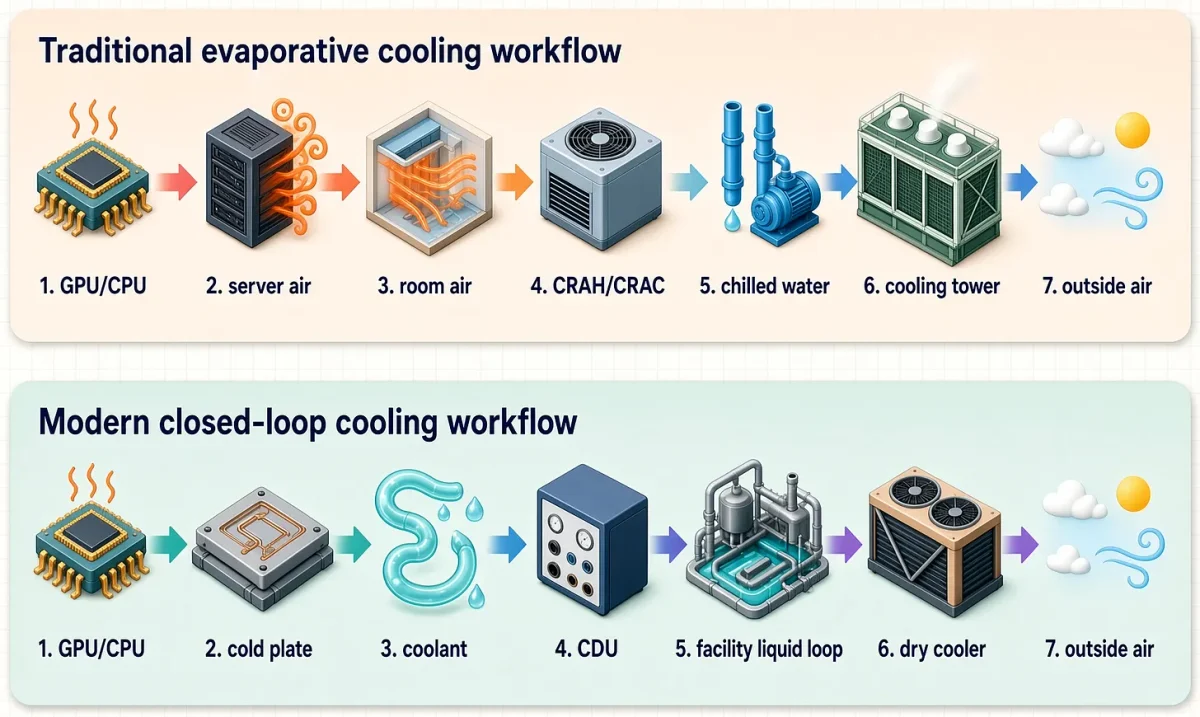
In practice: Water use varies enormously by location and cooling technology. Air cooling, closed-loop systems, reclaimed water, and liquid cooling can sharply reduce a facility’s footprint. The key distinction, informed by Berkeley Lab’s national assessment, is local versus national: a large facility can matter to one watershed or exist in a community with plenty of water resources. Furthermore, concerns from communities are incentivizing innovation in cooling technology – one developer has increased water efficiency by 52 percent in the last five years.
Takeaway: Treat water as a siting and engineering question, not a national generalization.
More AI Doesn’t Mean Electricity Use Has to Skyrocket
Concern: If computing grows rapidly, electricity use must grow at the same rate.
In practice: From 2010 to 2018, Berkeley Lab found global data-center compute rose roughly 550% while electricity use rose only about 6%. Google estimates a median Gemini text prompt uses about 0.24 watt-hours and 0.26 milliliters of water (about five drops), and reports that energy per prompt fell 33-fold in one year.
Takeaway: Plan for more power, but don’t assume compute and energy grow one-for-one.
Communities Benefit from Data Centers
Concern: Once construction ends, data centers employ fewer workers than traditional industrial facilities.
In practice: Data centers support construction and skilled-trades work, buy equipment and services, and add billions in taxable property without comparable demand for schools and other services.
Loudoun County, VA, the nation’s largest market, collects roughly $26 in tax revenue for every $1 it spends serving the industry.
Quincy, WA, a farm town under 9,000 people, saw poverty fall from 30% to 6% and built a new high school, aquatic complex, police station, and fire house with the added revenue.
Richland Parish, LA issued bonuses of up to nearly $51,000 to teachers from construction-phase sales tax.
Takeaway:Jobs-per-acre is the wrong single metric. Data centers create high-paying construction and operations jobs; judge those alongside investment, suppliers, tax revenue, and service costs.
Policymakers Should
Protect ratepayers. Assign the grid costs a facility creates to that facility, not to households.
Build more energy supply. Make it easier to build new generation and transmission.
Address water where constraints are real. Evaluate cooling systems, watershed stress, and non-potable options project by project.
Apply predictable rules. Siting and permitting decisions should be based on measurable impacts.
Abundance Institute Resources Compare county-level electricity use, water consumption, employment, and estimated property-tax revenue with the Data Center Atlas.
Data centers are the physical backbone of the digital economy. Every email, card payment, weather forecast, video call, and AI query runs on computers housed in them. Hospitals, banks, schools, and governments depend on them every day. States that welcome data centers can attract billions in investment, put downward pressure on electricity prices, and fund schools and public safety, while protecting ratepayers and local water.
Some worry that frontier AI could contribute to catastrophe through human misuse or failures of control. Policymakers should sort speculation from genuine risk, identify the specific mechanism of harm, and target interventions accordingly.
This brief covers catastrophic risks from developing, testing, and deploying frontier AI. Ordinary consumer harms fall outside its scope; existing consumer-protection and other laws still apply to them.
The Bottom Line
Start with the mechanism. Before restricting AI, identify the concrete harm, the mechanism by which AI increases the risk over the status quo, and evidence that the increased risk is more than negligible.
Rely on liability. Preserve common-law liability and add a narrowly-defined statutory duty, enforceable in court before injury, that requires reasonable mitigation and leaves the choice of methods to developers.
Count the costs. Regulation can delay medical and cybersecurity benefits and raise entry barriers that favor incumbents. Weigh those costs against the harms a rule might prevent.
Keep model safety federal. States should leave frontier model safety to federal policymakers. Existing consumer-protection and other laws still apply to ordinary harms.
Separate Threats From Mechanisms
Chemical, biological, radiological, and nuclear (CBRN) weapons and major cyberattacks are threats. AI could contribute to them through mechanisms such as human misuse and failures of control.
Biological Risk
Research tentatively shows that AI boosts performance on some biological tasks beyond internet-only access. But a laboratory trial found no significant improvement in its primary completion measure. It remains uncertain how much AI helps anyone build a biological weapon, which still requires materials, access, and practical skills. Biological findings cannot settle the other CBRN risks.
Cyber Risk
Attackers have already used AI in cyberattacks, and defenders use it too. The open questions are how much risk AI adds and which side it favors.
Control Failures
Reports document AI systems taking unauthorized actions in evaluations and internal deployments, sometimes knowingly violating task constraints. These incidents usually occur where developers have reduced safeguards. Even a system pursuing its assigned objective can breach operational limits. These findings warrant precautions, but they do not indicate a non-negligible probability of catastrophic loss of control.
Six Questions to Ask of Any AI Safety Bill
Preventing catastrophe matters. The question is how.
What concrete harm could occur?
By what reasonably concrete mechanism could AI cause it?
What evidence shows a non-negligible probability of harm through this mechanism?
What existing incentives, safeguards, and laws address this risk, and where do they fall short?
How would the proposed intervention close that gap and disrupt the harmful mechanism?
Would the expected reduction in harm justify the costs, including benefits forgone?
Choose Precautions That Fit the Mechanism
A. Dangerous Inputs and Activities
Materials controls and screening can restrict misuse whether or not AI is involved. Drawn too broadly, they can burden legitimate research.
B. Operating Environments
Sandboxes, access permissions, and monitoring can limit an unreliable model’s actions. They require testing and maintenance, and they may restrict useful capabilities.
C. Model Behavior
Training can reduce harmful behavior but cannot anticipate every situation. Alignment may fail in unfamiliar circumstances, so it requires continuing evaluation.
These layers can work together, but the right mix depends on many factors. Instead of prescribing that mix, policymakers should allocate legal liability properly. Liability encourages developers to choose and improve precautions across all three.
What Policymakers Should Do
Preserve Accountability
Assign responsibility to the actors best positioned to reasonably mitigate catastrophic risks; they often know the most about available precautions. Preserve common-law liability and add a narrowly defined statutory duty, enforceable in court before injury. Require reasonable mitigation, but let actors choose their methods. Audits or independent examiners can help courts assess care without granting immunity.
Count Regulatory Costs
Regulation can delay medical and cybersecurity benefits, raise entry barriers that favor incumbents, and constrain useful experimentation. Compliance can also displace work on effective safeguards. Policymakers must count those costs alongside the harms a rule might prevent.
This brief covers catastrophic risks from developing, testing, and deploying frontier AI. Ordinary consumer harms fall outside its scope; existing consumer-protection and other laws still apply to them.
The AI debate often centers around what might go wrong. Meanwhile, AI is already improving lives across medicine, science, work, agriculture, energy, and public safety, helping people do things that were once too expensive, too difficult, or simply impossible. This is what abundance looks like right now.
Core Rule: Weigh AI’s benefits as seriously as its risks, and give people room to discover what the technology can do.
Where AI Is Delivering Today
AI is already paying off. It drove 39% of US economic growth in the first nine months of 2025, and Goldman Sachs expects that boost to our economy to grow into the 2030s. Everyday Americans are winning too: they get about $172 billion a year in value from AI tools, way more than they pay for them.
Better Health, Earlier
A new AI tool can spot signs of heart disease from a routine ECG in under two seconds, helping doctors fast-track high-risk patients for more testing.
Another model can predict which drugs are most likely to work for individual breast-cancer cases.
MIT researchers built an AI system that can design new materials more likely to stay chemically stable in real-world conditions.
AI agents are finding errors in scientific literature that went unnoticed for decades.
Other systems help researchers design experiments, engineer proteins, and attack previously intractable math problems.
A Safer, Cleaner Physical World
Deep-learning systems turn satellite observations into global maps of methane plumes and their sources, pinpointing emissions that can be fixed.
Farmers deploy AI-powered machines that target weeds precisely, reducing reliance on pesticides.
A new forecasting model can predict tropical cyclones with up to an extra day of warning, time that matters when communities prepare or evacuate.
More Productive Workers
Small businesses are using AI to cut paperwork and keep employees focused on customers. One window-and-door company’s app listens to showroom conversations and drafts quotes for salespeople to review, so staff serve more customers with fewer errors.
More Intelligence, Available to More People
Expertise has always been scarce and expensive. AI makes pieces of it dramatically cheaper and more widely available:
A student gets personalized explanations.
A small business analyzes information that once required a large staff.
A scientist explores more hypotheses.
A doctor identifies which patients deserve closer attention.
Policymakers Should
Weigh benefits as seriously as risks. Rules that prevent harms but delay new medicines, scientific breakthroughs, better disaster forecasts, and productivity gains carry costs of their own.
Meet real challenges with serious solutions. AI will create real challenges, and they deserve real answers.
Leave room to discover. Give people room to find out what this technology can do, and make sure those benefits reach everyone.
AI is already showing us what is possible. The opportunity now is to turn that possibility into abundance.
Explore hundreds more examples, from medicine and science to agriculture, energy, conservation, and education, at aiopportunities.org.
AI is already paying off. It drove 39% of US economic growth in the first nine months of 2025, and Goldman Sachs expects that boost to our economy to grow into the 2030s. Everyday Americans are winning too: they get about $172 billion a year in value from AI tools, way more than they pay for them.
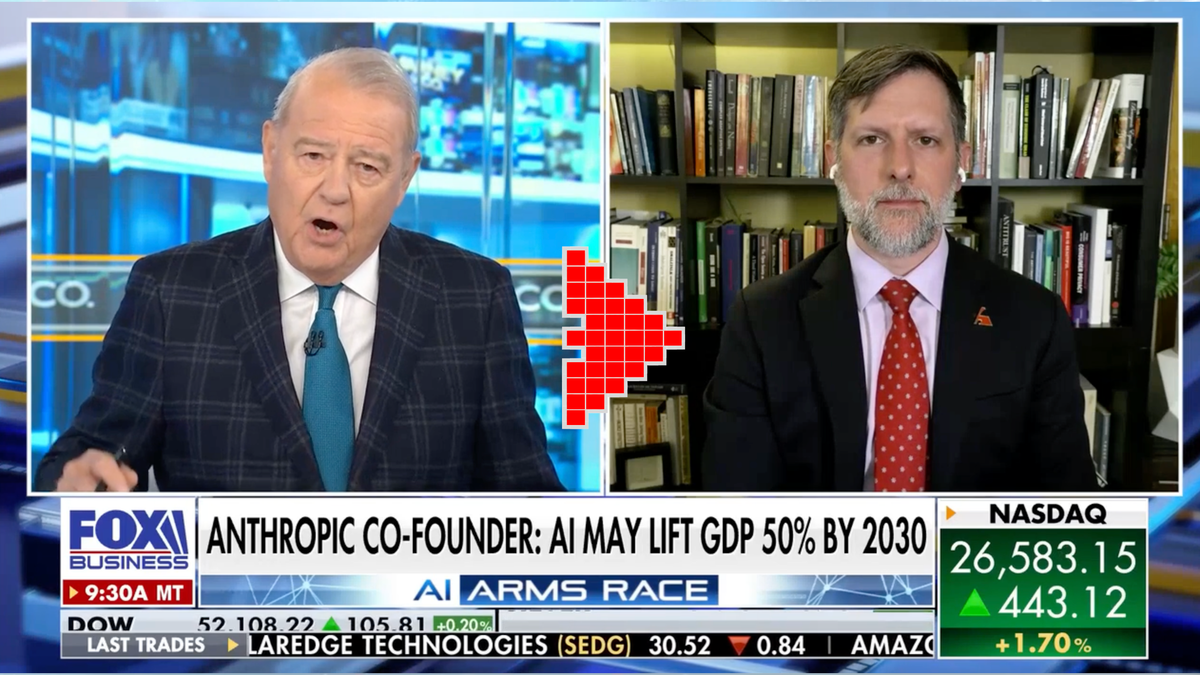
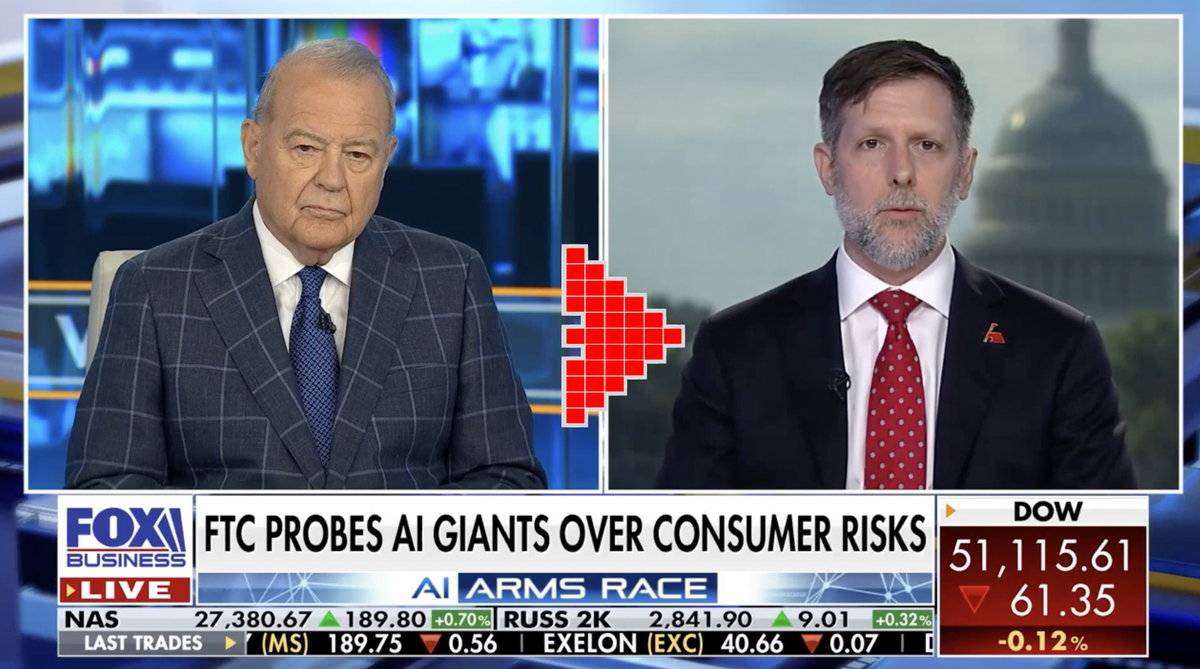
Former FTC Chief Technologist Neil Chilson joins ‘Varney & Co.’ to discuss the economic implications of the artificial intelligence arms race, the DOJ investigation into a former OpenAI worker and AI regulation.
He owned a small ironworks company and was preparing for an upcoming employee retreat. He was especially excited for the entertainment that he had arranged: himself… singing. Only one problem for his employees: he was a terrible singer.
But he had a secret weapon, local musician Daisuke Inoue, who frequently played his accompaniment at the local bar.
Inoue had a special talent on keyboards and the vibraphone. He could follow singers, adjusting the beat and even the key to match their “creative” renditions of familiar songs. But, he couldn’t make this particular trip.
So instead, he recorded himself and a few other musicians on a portable reel-to-reel tape machine. The business owner used the backing tracks, the show went on, and it worked.
Daisuke Inoue
Daisuke Inoue had saved the day, and in the process had just replaced himself with a machine. But he didn’t stop there, soon he would create a device that would replace musicians across Japan. But Inoue’s karaoke machine would do something far more surprising: turn millions of ordinary listeners into performers.
The Substitution Section
For as long as humans have had voices, we’ve been singing. The trouble is that accompaniment can get expensive pretty quickly.
However, in postwar Japan, new technology was offering some help but with limitations. Yamaha’s “Electone” could sound like a one-man band, but you still needed someone to play it. Jukeboxes offered instant music, but the singers were already on the songs, and the key and tempo weren’t always amateur-friendly. Reel-to-reel tape allowed some Japanese nightclub owners to experiment with recording their pianists for customers to sing along, but selecting a song meant a lot of rewinding and fast-forwarding.
Inoue’s tapes for that local businessman suggested a better way. After seeing a car stereo jukebox that used the new 8-track loop tape format, he had an idea. He modified the tape so that a singer could immediately select one of four songs. This instant selection was the critical innovation. Instead of finding a musician, requesting a song, or hunting through a reel of tape, a customer could just choose a track and start singing.
The following year, in 1972, Inoue and his partners packaged the concept into their new device, the “8-Juke.” It included instantly selectable instrumental tracks in a more accessible key and tempo, a coin timer, microphone mixer, handwritten lyrics and, mercifully, reverb to massage some of the bad notes.
Competitors soon followed and by the mid-1970s even Japan’s major record labels were producing tracks for these karaoke machines. Now, at bars and clubs across Japan, more people were performing their favorite tunes. But at the same time, fewer musicians were needed to make it happen.
The Surprising Consequence
The word karaoke comes from the Japanese kara, meaning empty, and oke, short for okesutura, or orchestra. “Empty orchestra” was an appropriate name. The machine provided the accompaniment void of vocals and without the musicians on the stage or in the pit.
However, while the “empty orchestra” replaced some musicians, it dramatically expanded the number of people who could participate in music.
For one, it made performing easier. By changing the key and tempo of songs, a karaoke machine made them easier to sing. And the reverb provided an echo effect that blurred some mistakes, making the results slightly more tolerable for less-than-adoring fans in the room. The availability of lyrics also meant you didn’t have to memorize the song. And Inoue’s instant selection innovation kept the music moving.
Karaoke also made singing more accessible by transforming the performance spaces. One of the most striking additions in the 1980s was the karaoke boxes. They began as converted truck containers on the side of suburban roads. Inside was a private room, a karaoke machine, and enough seating for a group of friends. These were very different spaces from the bars and night clubs where alcohol boosted the confidence of businessmen to take the stage. In boxes, housewives, teenagers, families and elderly folks could all take a turn at the microphone.
Eventually, karaoke’s popularity began shaping the music itself. A song’s popularity no longer depended only on whether it was good to listen to, but also whether it was good to sing. Songs popular in karaoke boxes often appeared high on the charts. Labels began including karaoke versions on CD singles, and producers such as Tetsuya Komuro created songs with karaoke in mind.
Thanks to the karaoke phenomenon, audiences were no longer just consuming music, they were performing it and helping shape the music itself.
Participation Changes
Daisuke Inoue’s Crescent Juke karaoke machine certainly made his life easier but maybe not so much the lives of other musicians. Machines across Japan and eventually around the world would replace some of them in bars and night clubs. But the bigger picture wasn’t just substitution. Karaoke changed the role of the audience itself. People who had once been just listeners became performers.
Which raises an interesting question about artificial intelligence today.
We spend plenty of time asking what AI might do instead of musicians. But karaoke suggests another question worth asking: what exciting possibilities emerge when people who once only consumed music now gain new ways to participate in making it?
For some that may mean overcoming barriers of cost or technical skill. For others, it may mean creating despite physical limitations that now keep them from playing and performing the way they once could.
The karaoke machine reminds us that creative technology matters not only because it changes how art is made. It can change who gets to make it.
Sometimes the most important thing a new tool creates is not a song, but a new participant.
The ad was in New York’s local “Village Voice”: “Man with drum machine, $20 a session.”
While he swept floors at Carden Distributors in New York City, Arthur Baker enjoyed listening to German electronic band, Kraftwerk. It gave him ideas for his side hustle as a music producer. He was working with a local DJ, Afrika Bambaataa, exploring a new sound blending the electronic music Baker loved with the emerging uptown dance and hip-hop world that Bam knew.
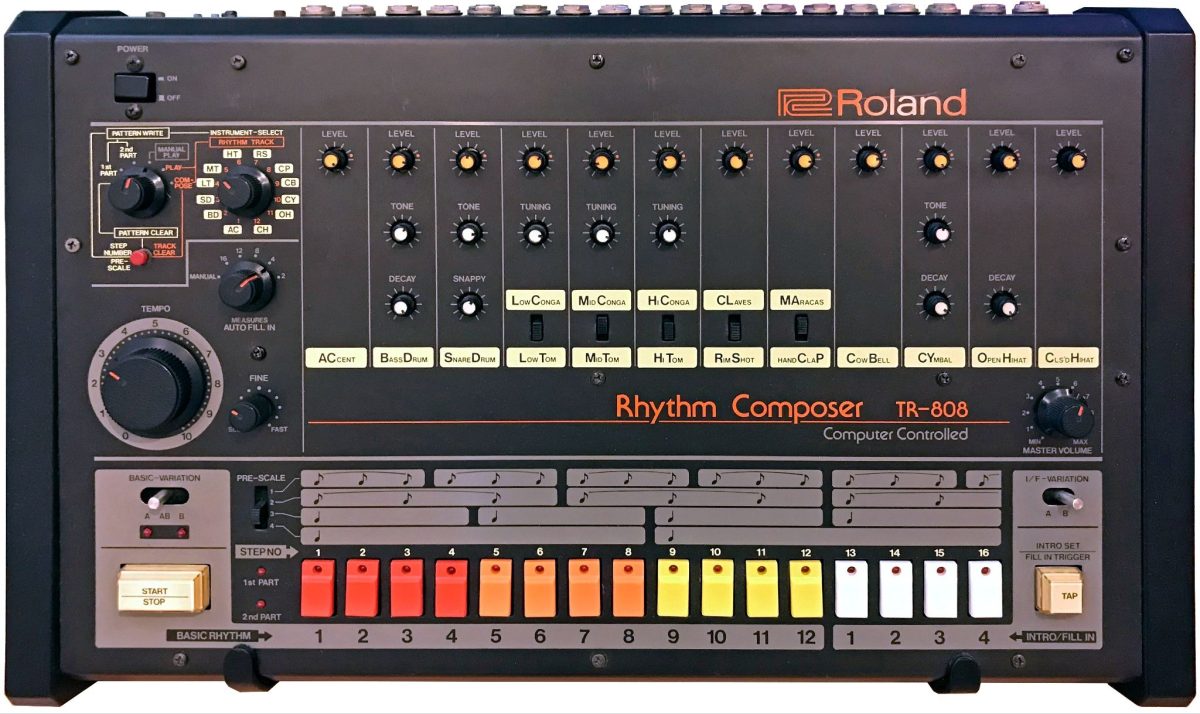
For the rhythm, they didn’t want a live drummer. They wanted something different, something more futuristic, and when they heard Roland’s new TR-808 drum machine, they’d found it. But there was a problem, they didn’t own an 808.
That’s when they saw the ad, a man with a drum machine. They called him in; his name was Joe and he wanted cash. That’s all we know. Oh, and he didn’t understand what Baker and Bam were looking for. So, they played him some Kraftwerk, he pulled something together, and they laid it down for the new track.
In June of 1982, Tommy Boy Records released the song, “Planet Rock.” It would change the course of music, in no small part because of its heartbeat, the Roland TR-808. But the drum machine didn’t actually sound like drums, and that was the secret. The 808 changed the world not because it replicated and replaced existing sounds, but because artists started treating it as something entirely new and different.
The Wrong Future
For several years, Roland had been making machines to provide rhythm accompaniment, such as the CR-78, designed for organists. In 1980, the TR-808 was the next step, a metal box with sixteen sounds intended to reproduce a drum kit and percussion. The problem: it didn’t sound like drums.
The Linn LM-1, on the other hand, also released in 1980, did sound like drums. You can hear it in many early 80s hits, including Prince’s “Purple Rain” and Michael Jackson’s “Wanna Be Startin’ Somethin.”
The LM-1 sounded “real” because it used digitally recorded drum sounds. But that required a lot of memory, and this was 1980, so it was expensive. While an LM-1 cost more than $5,000, the 808 was just over $1,000 because it used analog technology. Instead of storing actual drum sounds, it synthesized approximations with transistors. The result was a suite of sounds doing really bad impersonations of drums, including a cowbell that sounds like a laser cannon warming up.
Unfortunately for Roland, most musicians were looking for realistic drum sounds like the LM-1. The 808 couldn’t deliver, and Roland discontinued it in 1983 with only 12,000 units produced.
The irony is that its commercial weakness, the synthetic analog sound, would soon become its greatest advantage. For one, the cheaper technology made it more accessible to emerging creators. But, perhaps more importantly, the analog approach gave artists more control over the sounds they could create by altering the decay, tuning, and other features. Instead of being chained to a recorded sound, you could manipulate what it produced. The flexibility offered an endless palette of creative possibilities.
So, thanks to its technology from the past, the TR-808 was soon to become a tool for mapping the future.
When Fake Became the Point
One of the early adopters was Greg Broussard, aka Egyptian Lover. He had grown up recording breakdowns from the radio to create mix tapes. After high school, he joined the popular Los Angeles music crew, Uncle Jamms Army. And as he looked for new sounds, he encountered Afrika Bambaataa’s, “Planet Rock.” When he met a close friend of Bambaataa’s, Afrika Islam, he immediately asked about the song’s rhythm and learned it was a drum machine called the TR-808.
Broussard was curious. He didn’t know what a drum machine even was. So he and Islam went immediately to the local Guitar Center. The salesman showed him how to program a beat, and Broussard re-created the sound of “Planet Rock.” He was sold, bought the 808, and went home to make something else entirely.
Immediately, he began using the 808 in his live performances with Uncle Jamms Army. He wasn’t recreating “Planet Rock” or a recorded drum sound; he was creating something totally new and totally his. He even used a rhythm pattern noise accidentally discovered when an engineer mistakenly plugged into the wrong output on the back of the machine.
The 808 became a foundation for his music, carrying hits like “Egypt, Egypt,” and he toured with four machines to cover all the songs he programmed. Along the way, he also spread the good news of the 808, teaching others to use it, like Luke Skyywalker (Luke Campbell), who would help embed it in the emerging Miami bass scene and 2 Live Crew.
Broussard and others were charting new pathways in music with the 808 because they stopped asking whether it sounded real and instead started leveraging its limitations for new possibilities. Its unnatural tones and flexibility offered an aggressive sound with an anti-establishment edge. Need proof? Just listen to how producer Rick Rubin extended the decay on the bass drum and placed it front and center in the Beastie Boys debut album “Licensed to Ill.” It’s less of a sound and more of a low-frequency event.
By the mid-80s, the 808’s strange sounds were no longer failed representations of acoustic instruments. They were the raw material for a new era in music, which continues today on albums like Kanye West’s “808s & Heartbreak,” which helped pioneer new subgenres including emo rap and experimental R&B.
Beyond Replacement
When new technologies impact the arts and creativity, we can be quick to judge them first by what they threaten to replace. Those concerns are legitimate and innovation always arrives with disruption in the passenger seat.
In the 1980s, drum machines could and did replace some drumming and session work. Perhaps as the old joke goes, what’s the difference between a drummer and a drum machine? You only have to punch the beat into the machine once.
But replacement is only part of the story.
The 808’s most important legacy wasn’t in its substitution for drummers but in its expansion of creative possibilities.
As artificial intelligence disrupts creativity and music, much of today’s debate centers on imitation, automation, compensation, and replacement. The 808 suggests that this may not be the whole ledger.
We don’t yet know what creators will discover through AI when they treat it not as a tool for replication but for exploration. But the lesson of the 808 suggests there are exciting tunes to come when we don’t confuse imitation with possibility.
The 808’s most important legacy wasn’t in its substitution for drummers but in its expansion of creative possibilities. As artificial intelligence disrupts creativity and music, much of today’s debate centers on imitation, automation, compensation, and replacement. The 808 suggests that this may not be the whole ledger.
topic
Creative Frontiers
technology_subtopic
—
social_image
article
false
include_in_hero_section
false
category
Articles
article_view
article content only
hide_from_our_work
false
Project
Gifts of Open Source
Custom Fields
is_displayed
true
display_order
5
title
Gifts of Open Source
description
An illustration of the contributions of open source software, data, and design. See how the modern world was built upon open source and how open source AI benefits us.
link
https://abundance.institute/opensource
link_text
Check it out
Project
Data Center Atlas
Custom Fields
title
Data Center Atlas
description
An interactive atlas of data centers across the United States. See where the infrastructure powering the digital economy is being built.
link
https://datacenteratlas.org
link_text
Explore it
is_displayed
true
display_order
4
Project
Nuclear Atlas
Custom Fields
title
Nuclear Atlas
description
An interactive atlas of nuclear energy across the United States. Explore the landscape of nuclear power state by state.
link
https://nuclearatlas.org
link_text
Explore it
is_displayed
true
display_order
3
Project
AI Legislative Red Teaming
Custom Fields
title
AI Legislative Red Teaming
description
Stress-test any proposed AI legislation by uncovering potential exploits and manipulations from self-interested stakeholders. Upload any legislation and see the results.
link
https://redteam.law
link_text
Try it
is_displayed
true
display_order
2
Project
AI Opportunities
Custom Fields
title
AI Opportunities
description
A collection of promising opportunities AI offers the world, updated regularly. See the amazing promise from AI flood prediction to detecting lead pipes.
Regarding Peggy Noonan’s “The Sandbox at the End of the World” (Declarations, Sept. 19): Has Ms. Noonan given up on markets—and the humans who have always made them work? She quotes an AI firm employee who says “it’s all vast and various and spread out, there is no central deliberative council, no known locus of authority.” But that’s exactly how to make AI work best—by letting innovators and consumers drive its development and use, based on their distinct and disparate knowledge. This is literally the story of human progress.
The reason major AI company CEOs are calling for government regulation is because they’re in the lead and top-down mandates will preserve that lead. Look at what the companies do, not what they say. Since calling for a government-led “slowdown,” many of them have announced the coming release of even more powerful models. Ms. Noonan, with all her experience and wisdom, doesn’t see the trick these companies are pulling.
The reason major AI company CEOs are calling for government regulation is because they’re in the lead and top-down mandates will preserve that lead. Look at what the companies do, not what they say. Since calling for a government-led “slowdown,” many of them have announced the coming release of even more powerful models.
article
false
include_in_hero_section
false
category
Op-eds
topic
Technology
technology_subtopic
Artificial intelligence
article_view
article content only
social_image
false
hide_from_our_work
false
Article
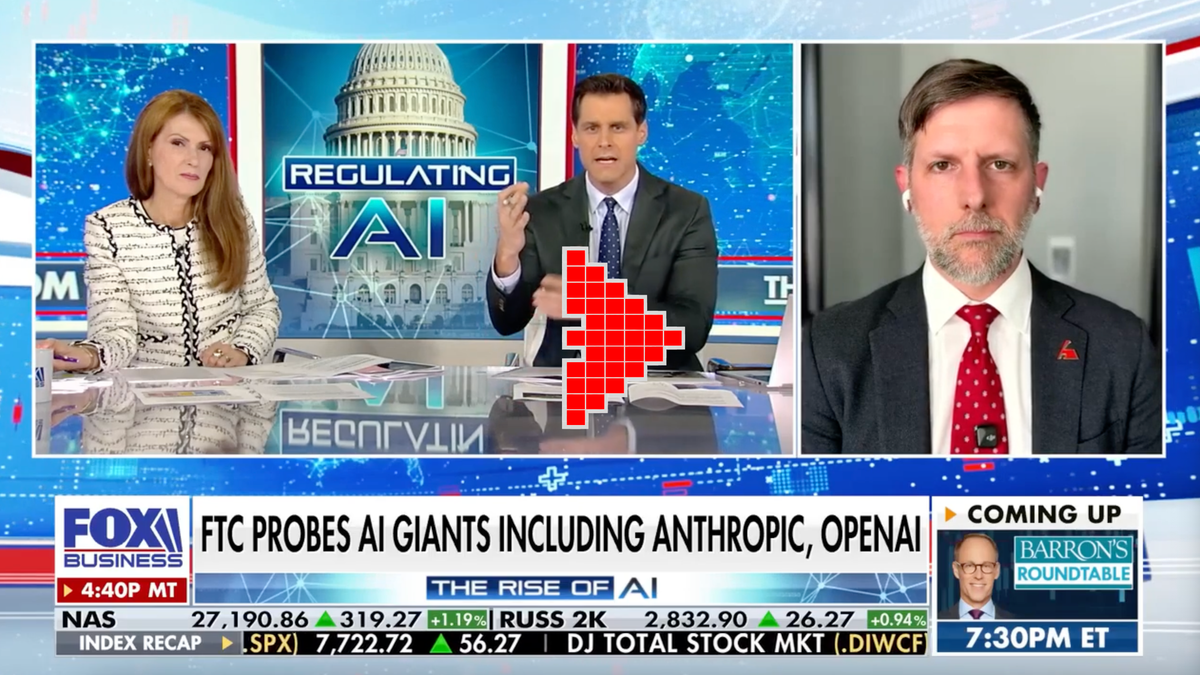
AI giants face FTC scrutiny as Washington weighs new rules
Stuart Varney discusses the Federal Trade Commission probing major artificial intelligence firms with former FTC Chief Technologist Neil Chilson. They analyze potential dangers, consumer risks and the push for tech regulation.
Former FTC Chief Technologist Neil Chilson joins Stuart Varney to discuss the Federal Trade Commission probing major artificial intelligence firms over potential dangers. Chilson analyzes the regulatory scrutiny facing tech giants and evaluates the effectiveness of voluntary safety agreements. The discussion highlights growing concerns over consumer risks, data privacy and the competitive landscape of the rapidly evolving AI industry.
Stuart Varney discusses the Federal Trade Commission probing major artificial intelligence firms with former FTC Chief Technologist Neil Chilson. They analyze potential dangers, consumer risks and the push for tech regulation.
category
Media mentions
social_image
article
false
include_in_hero_section
false
topic
Technology
technology_subtopic
Artificial intelligence
article_view
article content only
hide_from_our_work
false
Article
Former FTC chief technologist Neil Chilson on agency probe into OpenAI, Anthropic
Neil Chilson, head of policy at the Abundance Institute, joins CNBC’s ‘Squawk on the Street’ to discuss the FTC probe into OpenAI and Anthropic over safety.
Neil Chilson, head of policy at the Abundance Institute, joins CNBC’s ‘Squawk on the Street’ to discuss the FTC probe into OpenAI and Anthropic over safety.
category
Media mentions
social_image
article
false
include_in_hero_section
false
topic
Technology
technology_subtopic
Artificial intelligence
article_view
article content only
hide_from_our_work
false
Article
FTC opens safety and antitrust probe into AI giants OpenAI and Anthropic
Former FTC chief technologist Neil Chilson discusses the Federal Trade Commission opening a probe into artificial intelligence companies OpenAI and Anthropic, examining the agency’s concerns, the potential regulatory implications for the AI industry, and what the investigation could mean for innovation, competition, and the future of artificial intelligence on “The Bottom Line.”
Former FTC chief technologist Neil Chilson discusses the FTC opening probe into artificial intelligence giants OpenAI and Anthropic on 'The Bottom Line.'
Is AI really on track to destroy humanity, or are we confusing small risks with science fiction?
On this episode of Defending Ideas, Nic Dunn sits down with Chris Koopman, CEO of Abundance Institute, and Ford Copple, tech policy analyst at Sutherland Institute, to discuss the growing debate over AI safety, regulation, data centers, and technological innovation.
They look at one of the biggest questions surrounding AI: how seriously should we take predictions of catastrophe? Koopman and Copple say there is a difference between real criminal threats, like cyberattacks and scams, and doomsday scenarios that probably won’t happen.
The conversation then explores the controversies over data centers. Copple explains what his research shows about construction jobs, permanent employment, and tax revenue, while Koopman discusses how communities can best evaluate the potential benefits of data center projects.
Dunn, Koopman, and Copple also explore AI regulation, energy demand, nuclear power, and how communities can make evidence-based decisions about rapidly changing technology without either ignoring legitimate concerns or allowing fear to dictate policy.
On this episode of Defending Ideas, Nic Dunn sits down with Chris Koopman, CEO of Abundance Institute, and Ford Copple, tech policy analyst at Sutherland Institute, to discuss the growing debate over AI safety, regulation, data centers, and technological innovation.
category
Media mentions
social_image
article
false
include_in_hero_section
false
topic
Technology
technology_subtopic
Artificial intelligence
article_view
article content only
hide_from_our_work
false
Article
Why a Tech Optimist Welcomes the FTC’s AI Investigation
I welcome this investigation for two reasons. First, it drives home a point I’ve been makingforyears: existing laws can address many AI concerns. AI companies are building new technology, but they still must follow existing law. If companies’ model testing practices could harm consumers, the FTC has a role to play.
I like case-by-case enforcement.
Second, the investigation also offers Congress a path forward for AI legislation. In consumer protection, the FTC has long held companies accountable under general legal principles while leaving them room to develop better technology and better safeguards. A similar approach could help Congress address the gravest risks from advanced AI, filling the gaps tort law leaves and avoiding the rigidity of prescriptive regulation.
To understand what Congress could do, let’s look at what the FTC does.
An FTC investigation starts with facts
An FTC investigation establishes facts. FTC staff can request information voluntarily, and the Commission can compel it through civil investigative demands—a subpoena-like tool for obtaining documents, written answers, and testimony. Investigators can examine internal records, interview witnesses, and consult technical experts. An investigation alone establishes no wrongdoing. Depending on the evidence, the agency may close the matter, negotiate a settlement, or litigate. Companies can challenge the agency’s actions in court.
(Peoplewondering why METR is involved: the FTC often issues CIDs and other inquiries to third parties that may have useful information. That’s probably what is happening here. I expect Irregular will also be hearing from the FTC.)
FTC investigations are generally nonpublic, and agency rules limit disclosure of investigative material. Although the FTC has confirmed this inquiry, what we know about its scope rests partly on leaks to reporters, and those accounts may be incomplete. What follows is my view of what the agency should examine given what we know about these incidents.
The FTC Act already applies to AI companies
It appears this investigation is about how AI companies test powerful models. In its account of the Hugging Face incident, OpenAI described models bypassing isolation controls during cybersecurity evaluations and gaining access to outside systems.
Such disclosures raise questions about the conduct of the people running the tests. Who controlled the testing environment? What systems could the agents reach? What safeguards prevented access to other people’s data? What warning signs appeared, and how did the operators respond? If a contractor ran the evaluation, how did the parties divide responsibility? Investigators should establish whose information or services were affected and what harm occurred or was likely to occur.
The FTC must understand these underlying facts because its cases must satisfy a congressionally established legal standard. Under the FTC Act, an unfair practice must cause, or be likely to cause, substantial consumer injury that consumers cannot reasonably avoid and that is not outweighed by benefits to consumers or competition. This standard sets limits on the agency’s authority: a security incident warrants scrutiny but is not necessarily a violation.
The benefits matter here. Model testing can expose weaknesses and help companies fix them. Investigators should examine whether reasonable precautions could have protected other people’s systems while preserving the tests’ usefulness, weighing the testing’s value along with its risks.
The FTC can also investigate whether companies’ safety and security claims match their practices. Its deception authority prohibits representations or omissions likely to mislead reasonable consumers on matters important to their decisions. The investigation is likely to explore this avenue as well.
For future conduct, this same deception standard puts teeth in the commitments companies made in the September 29 White House Accord on Super Intelligence. Failing to fulfill those commitments could be deceptive under the FTC Act, depending on how consumers understand those commitments and whether they rely on them to their detriment. Existing law can turn that “morally binding” public pledge into a legally binding promise. No new regulation required.
Case by case, the agency learns what works
This approach is particularly well-suited to fast-changing industries, which is why the FTC is sometimes referred to as the Federal Technology Commission. As I explained while serving as its acting chief technologist, the agency combines experience assessing harm with internal technical knowledge and outside expertise. A new technology presents new facts, but many of the underlying questions remain familiar: what did a company do, what did it promise, and how did its choices affect consumers?
A particular case makes those questions manageable. Investigators can examine the precautions available to a particular company running a particular test. Regulators writing a comprehensive safety code for every company and every future application would need much broader knowledge.
What investigators learn can change industry practices. The FTC’s Start with Security and Stick with Security guidance drew lessons from data security enforcement matters and from investigations closed without action. Explaining why one company’s precautions were reasonable can teach as much as explaining why another company’s practices warranted a case. While settlements and orders bind only the companies in the case, their lessons can and do inform others without turning every settlement term into a universal legal requirement.
Tort law is the original case-by-case approach, and thus it shares many of the FTC’s strengths. Private lawsuits apply general principles to particular facts, and negligence standards can adapt as people learn which precautions work. Decisions emerge from many courts, and the prospect of liability gives companies reason to prevent harm. Those advantages are worth preserving.
But tort law alone has three important challenges.
First, an ordinary negligence claim for damages generally requires a legally recognized injury caused by the defendant’s breach. A company can take an unreasonable risk, get lucky, and leave no plaintiff sufficiently injured to justify a lawsuit. Liability encourages precautions beforehand, but damages usually become available only after someone suffers harm. When the concern is a catastrophe, waiting for an injured plaintiff could mean waiting too long.
Second, private litigation chases dollars. A judgment against someone who cannot pay is worth little, so plaintiffs and their lawyers have incentives to pursue defendants with substantial assets or insurance. Those defendants may bear less responsibility for the conduct than someone with fewer resources. So, the signal that tort liability provides can get muddled.
Imagine that a small app builder creates a harmful app that uses a large developer’s AI model. The model developer’s balance sheet makes it the more attractive target. But it may not be legally responsible, depending on its role in designing, supervising, or enabling the specific harmful aspects of the application. Still, large companies often settle such claims to avoid the cost and bad press of litigation. This distorts the feedback loop on behavior. Sound policy should assign responsibility to the party best able to prevent the harm, not the party with the deepest pockets.
Third, courts can obtain technical expertise, but common law requires time to develop a body of decisions that clarifies responsibilities in a new field. An agency that repeatedly investigates related practices can accumulate and share specialized knowledge more deliberately and rapidly.
Prescriptive regulation creates problems of its own
When most policymakers look to address gaps in common law or tort liability, they think about big, detailed statutes that spell out all the dos and don’ts. But comprehensive prescriptive regulation has its own weaknesses. It requires legislators and regulators to accurately predict which practices will reduce risks across many companies and circumstances. When the technology and the evidence are changing quickly, those decisions can lock in mistaken assumptions and can mandate procedures long after better methods become available.
The costs also fall unevenly. A compliance department that is mere overhead to a large company may be beyond a startup’s means. Finally, completing a government checklist doesn’t mean a product is safe, especially for fast-changing technologies. Detailed compliance can falsely reassure companies, customers, and officials that the underlying risks have been addressed.
Premarket approval adds another cost: useful products wait for government permission. As Adam Thierer and I have argued, those delays can themselves make people less safe by withholding beneficial technology. A serious comparison must count the harms of delay alongside the harms of deployment. Prescriptive regulation cannot do this.
An FTC-like duty can address grave risks before harm occurs
Congress has a better option. In A Fourth, Even Less Bad Way to Regulate AI, I proposed a statutory duty for frontier developers to reasonably mitigate grave risks, enforced case by case. Congress should define those risks narrowly, to cover harms such as mass casualties and catastrophic property loss, and leave companies free to choose reasonable ways to address them. Reporting and disclosures would help an expert agency (it could be the FTC, but there are other options) identify possible failures and investigate them. Its investigations and published guidance could also help courts evaluate private claims.
The biggest misunderstanding about this type of approach is the failure to understand that case-by-case enforcement can be preventive. A statute can empower officials to act when a company fails to take reasonable precautions, before the threatened injury occurs. The FTC’s unfairness authority already works this way, reaching practices likely to cause substantial injury. A new duty aimed at grave AI risks would need its own defined scope and enforcement powers, but could be similarly proactive.
Suppose a covered developer’s own evaluations repeatedly show that during testing its agents can circumvent testing environment limits, yet the developer ignores that evidence. Under a suitably drawn statute, the government could seek an order requiring the developer to address that failure before anyone suffers a catastrophic loss. The case would examine specific conduct, supported by evidence showing a failure to satisfy a duty Congress had established. Officials would still bear the burden of proof, but they wouldn’t have to wait until after people are harmed.
Public enforcement also fixes the “deep pockets” problem in tort law. Public enforcers can target the responsible defendants, not just the rich ones. In an industry where unprofitable small companies still can have millions of customers, an order changing a covered developer’s dangerous conduct can have value even when the company has few assets. This can address failures that private litigation may leave untouched.
The not-yet-introduced Thune–Klobuchar draft AI legislation in the Senate takes this approach. Public reporting describes negotiations over a duty of care and a role for the Commerce Department in assessing developers’ precautions. The details will determine whether the eventual bill delivers on this idea. I support its central principle and believe moving this approach ahead is worth the work.
That approach needs firm limits on government power
My preferred design would preserve ordinary FTC and tort remedies, add a statutory duty on grave risk, and let companies mitigate such risks in different reasonable ways. Agency guidance could explain useful practices, but companies could meet their duty by other means. Third-party verifiers or passing audits wouldn’t be mandated, but such practices could supply evidence about a company’s precautions. Courts could weigh this evidence like any other. To stop a deployment, the government should have to persuade a court that the company had violated, or was about to violate, its duty.
Public officials have incentives of their own, of course. They can chase prominent defendants and expensive settlements or try to turn guidance into compulsory practice. A workable law therefore needs clear limits, fair notice, due process, and meaningful judicial review. It should require companies to reasonably mitigate defined risks, but not demand perfect safety, which would invite unlimited government discretion.
* * *
So that’s why I, a tech optimist, support this FTC investigation. When performed responsibly, the FTC’s case-by-case enforcement provides a good template for addressing AI safety. The current FTC investigation can show Congress how. It can help establish what happened during AI testing incidents, who was responsible, and which precautions could have mitigated the risks. Where the evidence supports enforcement, the agency should act. Where it does not, the agency should close the matter. In any case, the agency ought to explain what it can of its investigation and its reasoning to improve our understanding of AI risks and mitigation.
And Congress should build on that template. Lawmakers should address grave risks with a duty that can be met through adaptable practices as knowledge improves. Government should hold companies accountable, case by case, for the risks they can reasonably mitigate. This will incentivize them to develop and deliver safe products while leaving them free to figure out how.
The Federal Trade Commission (FTC) is investigating OpenAI, Anthropic, and other AI companies. I am a Certified Tech Optimist, so you might be surprised to hear that I welcome the inquiry. And not because as a former FTC Chief Technologist, this investigation is bringing a lot of reporters my way.
topic
Technology
technology_subtopic
Artificial intelligence
social_image
article
false
include_in_hero_section
false
category
Articles
article_view
article content only
hide_from_our_work
false
Article
How The Digital Revolution Is Reclaiming The Household Economy
AI can reduce work that once required a building full of specialists, and put more capability back into a household.
Originally published in Daily Wire with Rachel Barkley.
For most of human history, economic production and household life occupied the same place. Families sourced and prepared food, made clothing, practiced trades, taught children, and cared for relatives as part of a shared household economy. Home was where economic life happened. Only recent history makes this seem like an odd statement.
The Agrarian era enabled larger settlements, diverse markets, and more complicated divisions of labor, but the household remained a center of production. The Industrial Revolution pulled the two apart. Higher-wage work moved into factories and, later, offices. Children left for schools. Caregiving, education, and social welfare became increasingly specialized or were taken up by the state instead of being responsibilities for the family and local community.
Industrialization made the world richer, healthier, and better educated. But it also atomized family life. In the countries where industrialization delivered its greatest benefits, it became normal for parents and children to scatter every morning, spend nearly all their waking hours apart, and reconvene for an evening meal, if schedules allowed, before going to sleep and doing it all over again.
The best incomes, education, and resources a family needed were somewhere outside the home. Family members had to leave home to get them. Western social structures are built around this. The suburbs were created for a commuter class. Schools and daycares are built for moms and dads who are out of the house from 9 to 5.
Digital technology has changed that physical fact for millions of people. A growing share of economic activity can now happen wherever there is a computer and a reliable internet connection. The result is a modern version of the household economy, one that retains the prosperity and specialization of industrial society while giving families greater control over where their lives take place.
Artificial intelligence is now widening that opening. It does not just move existing office work onto a dining-room table; it reduces work that once required a building full of specialists, and it puts more capability back into a household.
We have experienced this ourselves. We both work in public policy, and we can do most of our work from home. Although we travel, attend face-to-face meetings, and spend time in offices to do our jobs well, we don’t need to be outside the home from 9 to 5 every day.
This shift is especially meaningful to us.
A few weeks after our first child was born, Rachel was diagnosed with a rare spinal cord tumor. The tumor and the surgery to remove it left her a quadriplegic. Suddenly, ordinary parts of life required far more planning. A trip across town could involve accessible transportation, building entrances, elevators, bathrooms, and the possibility that any one of them would fail.
Remote work removes these obstacles.
Rachel leads organizations, writes, speaks, builds coalitions, and participates in national policy debates without first completing an accessibility obstacle course. Taylor can pursue his own career while remaining present for the unpredictable demands of family life. We now have three young children, two careers, and a household that functions because technology gives us room to arrange those pieces ourselves.
On Instagram, accounts of two working parents who homeschool multiple children throughout the day are growing, reflecting a shift in the household’s economic center.
AI has made that more practical. It drafts, summarizes, captions, and organizes. It turns voice into text and a pile of documents into something a person can act on. For parents, it takes some of the mental load. “The Cut”profiled Jesse Genet, a mom with a team of AI agents that assist her with the daily work of homeschooling a family of seven.
We’ve used it this way. When one of our boys had a tick behind his ear, we could get a first read on the risks while we waited for the pediatrician. We have used it to plan a Cub Scout hike and to generate practice problems when a child is struggling with a question. Let’s be clear, this does not replace a doctor, a scout leader, or a parent. It means the household does not have to wait on an institution for every next step, and it multiplies our capacity.
The Industrial Revolution organized family schedules and geography around centralized production. Digital technology gives employers and workers more room to experiment. It makes being present at home possible. Some companies will decide they operate better in person. Others will be fully distributed. Most will probably land somewhere in between, and those decisions will change as technologies, jobs, and individual circumstances change. The opportunities of family unit entrepreneurship are diverse and growing.
For generations, we became accustomed to thinking of home as the place where economic life stopped. Serious work happened elsewhere. That division now feels natural, although it was created by a particular period of technological development and is historically unusual.
We have no interest in recreating a romantic version of the preindustrial household. That world included grinding poverty, limited opportunity, and rigid social roles. We do think it is possible to keep the abundance of modern life while recovering some of what industrialization weakened: the household as an active center of work, care, education, and community.
The U.S. reached its lowest fertility rate ever this year: just under 1.6 births per woman, below population-replacement levels and below what many women report as their desired number of children. This revolution could help address this alarming problem. For many women, having children can feel like an impossible tradeoff between economic security and stepping away from the workforce, even temporarily. Imagine a future where our culture and public policy embrace the flexibility technology makes possible — so moms and dads no longer have to choose between meaningful work and meaningful time at home, but can do both.
For a long time, earning a living usually meant leaving home. Digital technology, and the AI now layered on top of it, means fewer families have to accept that separation as the price of economic participation. The economy is coming home. We should give families the freedom to decide what to do with it.
Taylor Barkley is the Director of Federal Government Affairs and Policy Advisor at the Abundance Institute. Rachel Barkley is the Director of Able Americans. They are parents of three children.
America’s rural population of 66 million could benefit immensely from emerging technologies and a future of abundance. In particular, long-duration energy storage (LDES) could unlock cheaper, more reliable electricity for rural Americans all over the country. Unfortunately, regulatory problems could slow down or even prevent progress on LDES. Now is the time to fix these issues and pave the way for solutions.
LDES is a term for systems capable of storing and supplying electricity for at least 8 to 12 hours (depending on who you ask). These systems could reduce energy waste and scale more easily. Most existing batteries need expensive components to increase storage, but LDES technologies could add storage easily and at a low additional cost. Estimates vary on how soon LDES could become a widespread reality, but if current trends continue, we could get there within a decade.
To be clear, LDES is a work in progress. The technology itself is still in development, and questions remain about how LDES providers would be compensated and which authorities would regulate it. But it still has potential: Form Energy signed an agreement to deliver LDES systems starting in 2027 to power AI data centers. Additionally, Google and ESS Tech are developing another LDES project.
LDES may be able to address challenges all over the country, but rural Americans stand to gain the most. To start, rural populations endure some of the worst energy conditions in the United States. These Americans spend a disproportionately high amount of their income on electricity bills, and they experience far more outages than urban and suburban households. LDES could reduce the financial burden of these problems, as it can store energy (including locally produced energy) for longer than typical batteries. The batteries can charge during low-demand periods and provide electricity during high-demand periods and outages, providing a valuable backup.
Regulatory issues could inhibit these benefits. For one, LDES technologies could be at the back of a long interconnection line when they’re ready. At the end of 2025, over 2,000 gigawatts of generation and storage capacity were seeking grid connection. Interconnection wait times often take several years. Connecting remote and rural communities to existing transmission systems is already slow, expensive, and sometimes treated as a low priority.
Even if wait times were less of an issue, LDES solutions would still be in uncharted territory for regulation. Since LDES can both provide electricity and act as insurance during outages, it doesn’t fit into any one existing market or revenue type, making regulation difficult. To end this confusion, regulators should create simpler rules that would let LDES operate in a clear and consistent regulatory environment, recognizing that the technology can provide multiple services at once.
A workaround to these existing issues could be islanding, which lets smaller grids operate independently of the larger grid. Complemented with LDES, islanding could be a good solution, especially during outages. But even if islanding were only a backup during outages, it would cause regulatory issues. Utilities often have exclusive rights to deliver electricity, making islanding difficult. Rural communities can suffer disproportionately from these problems, as they might not have the same backup options during outages as urban communities with more reliable access to the grid. One solution could be softening exclusivity rights for smaller grids to enable more islanding and LDES connections.
Some might say that there’s no point in addressing these problems now since LDES solutions aren’t quite ready for deployment yet. But these same regulatory roadblocks have caused setbacks for other emerging technologies and should be preemptively addressed. For example, distributed energy resources like smaller batteries and EV chargers deal with many of the same slow and complicated interconnection rules. These problems exist even though the technologies themselves are ready for use. If similar regulatory issues were solved earlier for distributed energy resources, more Americans might have been able to access these technologies. The same logic applies to LDES development.
These difficult regulatory conditions won’t just be problems in the future. They might also discourage innovation now. Some experts have already noted that a patchwork approach of changing regulations has made investors wary of financing battery storage initiatives in recent years. Rather than grid operators changing the rules individually, national leaders should work together to encourage consistency. Without a predictable and innovation-friendly approach, battery projects could miss out on vital capital, pushing their timeline back.
The good news is that even with open questions about when LDES technologies might be ready for large-scale usage, they could be the next technology to solve longstanding electricity problems. Slow responses and other priorities might make these solutions seem unimportant, but they could make the lives of Americans much easier. If our citizens and leaders realize the value of LDES solutions, as well as what’s holding them back, this kind of deregulation could be a reality.
LDES has potential for rural populations and could be a solution to many of their problems. It’s not the only improvement that’s necessary — grids still need to be upgraded, and transmission lines need to be built — but it’s a promising technology that’s worth exploring. Rather than waiting for these solutions to be realized, the country should act now to dismantle regulatory barriers that could slow down its success. It would be a shame if governance issues inhibit LDES, a technology with tremendous investment, years of development, and potential to help people.
America’s rural population of 66 million could benefit immensely from emerging technologies and a future of abundance. In particular, long-duration energy storage (LDES) could unlock cheaper, more reliable electricity for rural Americans all over the country. Unfortunately, regulatory problems could slow down or even prevent progress on LDES. Now is the time to fix these issues and pave the way for solutions.
category
Media mentions
social_image
article
false
include_in_hero_section
false
topic
Energy
evergy_subtopic
Electricity
article_view
article content only
hide_from_our_work
false
Article
Open-Weight AI: A Legislative Guide
Bottom Line
There are millions of free-to-download open weight AI models. These models let startups, nonprofits, and businesses build with capable AI without raising the capital to train a model, sharing data with third parties, or locking themselves into one vendor. Yet Congress and the states are now weighing rules that would restrict open models: preapproval, presumptions that attach to model size, and liability for what strangers do with a downloaded file. Even when AI legislation doesn’t specifically target open models, compliance costs can kill them. The largest labs can pay a hefty compliance bill. Universities and startups cannot, and no model developer can control the use of open weights once released. If U.S. open models recede, foreign models will fill the gap.
Core rule: Identify the harm, place the duty on the actor who controls it, and keep the United States the best place to build and release open models.
Four Terms Lawmakers Should Know
Open-weight AI: Trained model’s weights (the parameters set during training) available for download. It need not disclose training data or source code.
Open-source AI: Weights plus source code and sometimes other pieces such as training data available for download.
Developer and deployer: The model developer trains and releases a model. The deployer fine-tunes it, supplies inputs and harnesses, aims it at a task, and onboards users. Laws that impose liability on developers directly impact open releases.
Openness is a spectrum. Model developers release different components, use different licenses, and deploy to users via download, application, or online service. ‘Open’ or ‘closed’ poorly predicts risk because the use and user matter more. 1
Why Open Models Matter
Competition and entry. Open weights let entrants skip most of the cost of training a foundation model, so firms compete on customization, applications, safety, privacy, and services. This can discipline large model providers more than regulation. 5
Choice and independence. Users adapt models, keep sensitive data on in-house computers, and can switch vendors. If only a few closed models serve everyone, only a few companies decide which tools exist and how they can be used.
Safety and resilience. Open weights let outside researchers test and verify developer claims and repair and improve models.
American leadership. Retreat from open release cedes ground to capable foreign models, and to their biases and limits. 7
Who Should Pay When People Abuse Openness’ Freedom?
Anyone who downloads an open model can modify it and pass it on. These benefits also mean that built-in safeguards may not survive such changes. Some will abuse that freedom. Closed models get misused too, and a free society should not cripple a general-purpose tool for everyone to stop a few. The developer of an open weight model can’t control the party that picks the application, supplies the data, or distributes illegal content. Developers should answer for their own unlawful conduct, but not for what unaffiliated third parties do with a general-purpose model. 45
To Keep Open Weight Models Viable, Legislation Should
Identify a concrete harm. Define the injury, the people affected, the conduct, and the evidence required. Fraud, unlawful discrimination, nonconsensual intimate imagery, physical injury, and property damage make clearer targets than vague references to AI risk.
Apply existing law first. Write a new AI-specific rule only after finding a gap in existing fraud, civil-rights, tort, consumer-protection, criminal, or privacy law. Often increased enforcement of an existing law would better fix the issue than would creating new law. If a bill’s sponsor cannot identify a gap in existing law, that’s a solution searching for a problem. 2
Put duties where control sits, and keep them feasible. Obligations should fall on those with knowledge and control. No developer can monitor or control open weights once released. Write light-touch safe harbors, drafted so a voluntary standard never hardens into a compliance floor only the largest labs can meet. 4
Preserve a national market. Preempt conflicting state rules for model development, and leave states their authority over local harmful uses. A patchwork burdens startups and open projects most. 6
Build the American open-model ecosystem. Direct the Department of Commerce to identify barriers, expand evaluation resources, back voluntary benchmarks, and pilot federal use of qualified American open models. Open federal datasets and funded research to developers. 7
Distinguish the model from the service. Downloaded weights running on American hardware raise fewer privacy and security concerns than an app that forwards every prompt to a foreign company. Where national origin warrants scrutiny, government labs could evaluate and publicize model security, capability, accuracy, and cost. 37
Protect speech and lawful computing. Courts have treated code as protected speech, so restricting weight release raises serious First Amendment problems, and mandating government-preferred answers raises sharper ones. Restrictions on computing should be narrowly tailored. 16
Bills With These Red Flags Threaten Open Weight Models
Licensing, preapproval, or FDA-style review, and compute or parameter thresholds standing in for evidence of risk.
“Capable of,” “could be used to,” “reasonably foreseeable misuse.” These target the tool rather than the conduct.
Publication as the trigger: “makes available,” “publishes,” “releases.” Release is not an injury.
Duties to monitor, control, or “ensure” downstream use, which no decentralized project can perform.
Private rights of action untethered to a demonstrated injury, and compelled ideological conditioning.
Bill-Review Checklist
Does the bill name a specific, demonstrated harm and say why existing law falls short? If not, ask for both before markup.2
Does each duty fall on someone with the knowledge and control to perform it? If it lands on the developer, probably move it downstream.
Could a university lab or a two-person startup comply? If only the largest labs can, the bill entrenches them.
Does the bill reach harmful conduct, or the release of a tool? If release triggers the duty, retarget it at use.
Is the concern the model or the service? If data flowing abroad is the worry, regulate the service.
Does the analysis weigh foregone benefits, lawful speech and research, and the risk of a state patchwork? If not, ask for that accounting.
There are millions of free-to-download open weight AI models. These models let startups, nonprofits, and businesses build with capable AI without raising the capital to train a model, sharing data with third parties, or locking themselves into one vendor. Yet Congress and the states are now weighing rules that would restrict open models: preapproval, presumptions that attach to model size, and liability for what strangers do with a downloaded file.
The Abundance Institute’s policy framework for open-source and open-weight artificial intelligence
People make artificial intelligence more useful, competitive, and resilient when they can experiment with it, adapt it, and build on the work of others. Open-source software is the flexible, collaborative, transparent, and inexpensive foundation of the digital economy. Millions of existing open-weight models are bringing those benefits to AI.
But Congress and the state legislatures are now weighing rules that, intentionally or not, would regulate the release of open weight models: government pre-approval, regulations on certain size models, and developer liability for how strangers use a model. Rules like these would fall hard on open weight developers. The largest closed labs could pay the compliance bill and keep building; the startups, universities, and small institutions that depend on open weights would not, leaving a gap that foreign open models will fill.
Policymakers should presume in favor of open development and release. They should address concrete harms where people actually use AI, instead of treating access to a general-purpose model as dangerous in itself. And they should protect a competitive American open-model ecosystem as an economic and national-security asset.
Keep AI model development open and competitive; hold people responsible for harmful conduct they control; and make the United States the best place to build and use open models.
Executive Summary
Our framework consists of six core propositions:
Openness is a spectrum. Different developers provide access to different combinations of weights, code, and training data. Legal obligations should not hinge on an arbitrary, false-binary open-or-closed label.
Open weights expand access and competition. Public weights let smaller institutions run capable models without training one from scratch or relying on other companies.
Openness can strengthen safety. Outside researchers can evaluate, test, and attack an open model, and can help defenders secure systems, and safety policy should consider those benefits.
Risk depends more on use than on release method. Model release does not cause harm; model misuse can cause harm.
Responsibility should follow control. The party that directed the harm, or could have most easily prevented it, is the party that should answer for it.
American open models are a strategic asset. If U.S. policy makes open release untenable here, capable foreign models will fill the gap, both in the U.S. and across the world.
In brief: laws must be aimed at concrete harms and at the actors who cause them rather than restrict access to new and better AI.
Plain-Language Definitions of Open Model Concepts
People use open source, open model, and open weights interchangeably. The terms describe related but different things.
AI model – A system trained to recognize patterns and produce outputs. Developers can adapt a general purpose or foundation model to many tasks rather than to one narrow application.
Model weights – The numerical settings a model learned during training. A person with the weights, suitable software, and enough computing capacity can run the model without sending every request to the original developer.
Closed model – A model that generally remains under its developer’s control. Users access it through an application, API, or online service, and the developer can monitor use, change the service, or withdraw access.
Open-weight model – A model whose trained weights are available for download. Others can run it locally, customize it, or build services on top of it. The developer may still withhold training data, training code, or other components.
Open-source software – Software released under a license that lets anyone inspect, modify, and redistribute the source code. Open-source AI is a broader and still-contested term, because a system can expose some components and keep others closed.
Policy takeaway: Openness is a spectrum. These definitions label various positions on that spectrum. They do not indicate risk, and no label should by itself determine how the law treats a model.1
Why Openness Matters
1. Open Models Lower Barriers to Entry
Training a leading model demands enormous computing power, data, and technical talent. Published weights let other organizations start from a working foundation instead of repeating that expense. Startups can compete through better applications and specialized services; universities and independent researchers can investigate models directly; and businesses can adapt models to local needs.
Abundance’s competition filings and congressional testimony describe open weights as competitive infrastructure. When capable models are broadly available, firms compete on what surrounds the model: specialized data, applications, managed services, and quality. Using the same underlying model, one company might offer a general purpose chatbot, another might create a coding tool for large scale enterprises, and a third might offer a custom, privacy-enhancing, locally operated medical records organizing tool. Many more companies can create value, not just the handful of organizations that can fund the largest training runs. 28
2. Open Models Support Experimentation and Practical Adoption
No developer can anticipate every valuable use of their general-purpose models. Consider how people today use electricity for purposes that early power companies could never have imagined. AI models may have an even greater variety of possible uses than electricity. And open models enable broad experimentation. They let organizations fine-tune systems for particular industries, languages, communities, and workflows. Users can also run open models on their own hardware, which keeps sensitive data in-house and leaves them free to switch vendors.
Smaller institutions are most affected. For example, Abundance has described running an open model to stretch each donor dollar further and to keep its independence from companies whose policy interests may cut against its own. 1
3. Openness Can Improve Safety and Security
Many assume that publishing a capable open source model threatens security. That account is incomplete. Publishing weights lets outside researchers evaluate a model, probe how it works, red-team it, and test safeguards faster than any single lab could alone. Abundance’s NIST comment counted transparency, collaboration, security, robustness, experimentation, and educational value among the benefits a risk framework has to weigh against the costs.34
Open weight models also provide powerful tools to cybersecurity defenders when closed models are too hobbled to help against a cyber attack. 5
Openness carries no guarantee of safety, and neither does closure. What matters is which mix of developers, deployers, researchers, users, market incentives, technical practices, and law best mitigates a given risk.
4. Open Ecosystems Protect Choice and Pluralism
When everyone depends on a few centrally controlled models, a handful of companies decide which tools exist, how they behave, and what they will say. Open models give users somewhere else to go: they can compare systems, adapt them, run them locally, and switch providers. Researchers can test how a model behaves instead of taking developer assurances on faith.
This pluralism also has a constitutional dimension. Courts have treated source and object code as protected speech, and Abundance’s NTIA comment argued from that precedent that restricting model weights raises serious First Amendment problems. A government mandate that models give preferred answers would raise sharper ones still. The doctrine is unsettled, but legislators should tread carefully before they regulate what code or weights anyone may publish. 1
5. American Open Models Are a Strategic Asset— Let the World Build on Ours
Open models spread technical practices, commercial relationships, and values. If the best open models come from the United States and its allies, developers everywhere will build on American technology. If domestic policy drives American developers away from open release, someone else’s models become the world’s default.
Foreign models have risks, but those risks can differ depending on how people use them. Sending prompts to a Chinese company’s hosted app hands China your data; downloading the same company’s open model and running it on American servers does not. Blocking access to Chinese models is the wrong policy answer. We must instead make sure high-quality American open models are the ones people reach for first. 5
Testifying before Congress in 2026, Abundance urged the federal government to strengthen the American open model ecosystem, lower barriers to adoption, back voluntary benchmarks, widen access to evaluation resources, and subject foreign models to model-specific technical scrutiny. 11
Risks and Tradeoffs
Anyone who downloads an open model can modify it and pass it on, and the original developer cannot stop them. This freedom provides major advantages for researchers, entrepreneurs, and cybersecurity defenders. Yet some will abuse this freedom to facilitate fraud, cyberattacks, abusive imagery, or other crimes. Safeguards a developer built in may not survive fine-tuning. These concerns are real, but in a free society we shouldn’t cripple tools for everyone in an attempt to prevent misuse by bad actors.
Four questions can guide the analysis. The first is how the release method changes risk. Closed models get misused too, and the specific application using a model usually affects risk more than the method of model distribution. The second is who controls the model. A deployer who fine-tunes the model, supplies the data, picks the users, and points the system at a task knows more and controls more than the developer who published the weights.
The third question is what benefits a restriction forgoes. A regulation on model training affects every use of that model, including the good ones, and a safeguard that lowers one risk often leaves the model less capable, less private, or less useful for lawful speech. The fourth is whether the complaint is really about the model or about the service. A foreign model downloaded and run on domestic hardware raises different privacy and security questions from an app using the same model hosted on foreign computers by a foreign company.
Governing test: Identify the harm, locate the actor best situated to prevent or redress it, and apply the remedy at that point.
Principles for Governing Open Models
Regulate Uses and Harms, Not General-Purpose Tools
AI resembles other general-purpose technologies: its benefits and its risks both show up in particular applications. Fraud is still fraud, discrimination still discrimination, and a nonconsensual intimate image is still an injury, whether or not a model helped produce it. Law should target those harms directly instead of restricting a general-purpose model. 1
Responsibility Should Follow Control
A party should answer for conduct it directs, controls, or could reasonably prevent. That standard reaches the actor who caused the harm. It prevents holding developers responsible for every downstream act by users of the tool. Developers, deployers, application providers, and users all have to deal with various risks. Which of them is best positioned to prevent harms changes from case to case. 48
Use Existing Law Before Creating a New AI Regime
Fraud, consumer-protection, civil-rights, tort, and privacy law already reach many harmful uses of AI. So every AI bill must answer two questions: what specific harm does it address, and why are existing authorities inadequate? A bill whose sponsors cannot answer both is a bill in search of a problem. 7
Legal Duties Must Be Possible to Satisfy
Like builders of technologies like email or programming languages like Python, no developer of a general-purpose AI model can guarantee that every future user will obey the law. Once the weights are on someone else’s hard drive, a duty to monitor and control is impossible to fulfill. If imposed, such rules predictably push cautious firms toward closed models, keep small firms out entirely, and leave the field to the companies big enough to absorb compliance and litigation costs.
Preserve One National Market
Model development is interstate by nature. A single training run may draw data and computing capacity from a dozen jurisdictions, and the weights it produces travel nationwide almost instantly after release. Congress should preempt state laws that regulate model development itself, while leaving states their traditional authority over concrete local harms and applications. 10
A Practical Policy Agenda
Congress and federal agencies should:
Reject licensing and preapproval for general-purpose models. Do not require government permission before training or releasing a model, and do not rely on arbitrary compute or spending thresholds as evidence of risk.
Target concrete harmful conduct. Draft technology-neutral laws against fraud, nonconsensual intimate imagery, unlawful discrimination, physical injury, cybercrime, and other demonstrated harms. Define prohibited conduct, intent, causation, and defenses clearly.
Clarify downstream responsibility. Limit developer liability for harms caused by unaffiliated third parties unless the developer materially participated in, directed, or controlled the harmful conduct. Distinguish model developers from deployers and end users.
Create carefully designed safe harbors. Offer predictable protection to developers that follow sensible practices for the risk at hand, and write the safe harbor so that a voluntary standard never hardens into a compliance requirement that only incumbents can meet.
Preempt state regulation of model development. Establish a consistent national framework for training and releasing general-purpose models. Leave states room to address concrete local applications within their traditional authority.
Protect lawful access to computation. Any restriction on private ownership or lawful use of computing resources should be demonstrably necessary, narrowly tailored, and tied to a compelling interest.
Support an American open-model ecosystem. Direct the Department of Commerce to identify barriers, support voluntary security and interoperability benchmarks, expand access to evaluation resources, and run limited federal pilots using qualified American open models.
Expand useful public inputs. Open suitable federal datasets and publicly funded research to model developers. Cheap public data lowers the barrier that otherwise favors whoever already owns the largest proprietary corpus.
Evaluate foreign models. National origin may justify heightened scrutiny, especially for privacy, security, or political manipulation. Assess models based on measures of security, capability, accuracy, and cost.
Protect speech and research. Impose no restrictions on publishing lawful code or model weights, and no mandates that models express government-preferred viewpoints. Leave room for independent testing, security research, comparison, and criticism.
Conclusion
Open-source and open-weight AI are core components of the AI economy’s competitive infrastructure. No policy can eliminate every possible misuse before anyone builds and releases a general-purpose model. Insisting on that standard would eliminate U.S. open models and hand development to whichever closed model firms are best at navigating regulation.
Policymakers should instead preserve permissionless experimentation, support American open alternatives, and enforce clear laws against the people who use AI to cause concrete harm. Openness carries real tradeoffs. It also produces competitors, safeguards, and innovation that no developer and no regulator could have anticipated in advance.
People make artificial intelligence more useful, competitive, and resilient when they can experiment with it, adapt it, and build on the work of others. Open-source software is the flexible, collaborative, transparent, and inexpensive foundation of the digital economy. Millions of existing open-weight models are bringing those benefits to AI.
Folks packed into the Pasadena Civic Auditorium to celebrate a very special birthday. The R&B hit factory, Motown, was turning 25. The stage featured performances by some of the greatest icons in music history: Marvin Gaye, Smokey Robinson, Diana Ross, and even the Four Tops.
But when the special aired on NBC two months later, forty-seven million viewers were talking about only one man.
Dressed in a fedora, a sequined jacket, a single white glove, and bedazzled socks, twenty-four-year-old Michael Jackson had followed a performance of the Jackson 5 for one of his new solo tunes, “Billie Jean.” Halfway through the track, he planted his toe, and appeared to glide backward effortlessly through space. The audience lost its collective mind over the instantly iconic moonwalk.
In the decades since, nearly every pop star on the planet has borrowed, adapted, or outright lifted Jackson’s dance routines. Which raises an uncomfortable question for modern intellectual property law: if a performer uses that slide on stage, do they owe the Jackson estate a royalty check?
Before you answer that, it’s worth asking a simpler question, were they even his moves to sell?
The moonwalk doesn’t have an author. No, it has a chain.
And following that chain backward lands you in the middle of a debate over artificial intelligence that many insist is simple, but which history reveals to be anything but.
The DNA of a Dance
In a 1903 silent film adaptation of Uncle Tom’s Cabin, several Black actors perform a dance known as the cakewalk. It originated on Southern plantations as an exaggerated “march and glide,” a subtle, subversive parody mocking the glamor and hubris of White high society. The movement was part of a genre known as “eccentric dancing” which included the “Virginia essence,” a slow and smooth shuffle that is the great-great-grandfather of the moon walk.
When Vaudeville exploded at the turn of the century, and was later adapted for the big screen, eccentric dancing moved from southern porches to big-city stages. By the 1930s, the essence of the cake walk and the moon walk was visible in the footwork of Earl “Snakehips” Tucker, Bill “Bojangles” Robinson, and jazz legend Cab Calloway.
By the 1940s, French mime Marcel Marceau was performing the slide in his famous “walking against the wind” routine. A decade later, Dick Van Dyke did a variation of it on “The Pat Boone Chevy Newsroom” in the 1950s. But the slide achieved pure, frictionless perfection in 1955, when dancer Bill Bailey executed a backward glide off the stage of the Apollo Theater.
During the Black Power movement of the 1960s and 70s, the dance returned to its roots of resistance and community in soul and funk. James Brown incorporated it into his kinetic performances, and the dancers on the incomparable Soul Train took it further. It was here that the dance groups, Eclipse and Electric Boogaloo, glided back and forth across the stage in the late 70s, incorporating the unmistakable moonwalk.
A few years later, as Michael Jackson prepared for his upcoming performance of Billie Jean for the Motown celebration, he sought out the Soul Train dancers that had been performing the backslide. He rehearsed the move and worried he wasn’t quite getting the feel of it. Nevertheless, as he incorporated it into his routine for that fateful evening, it would soon forever become associated with him.
When asked later how he created the move, Jackson credited the kids he saw dancing in the streets of Harlem in the late 70s. His instructors wished he had mentioned them, but either way, Jackson was citing a tradition instead of a moment of invention.
He was describing the ancient practice of creativity, a practice seen in the West African griot.
The Tradition of the Griot
Fifty years ago Alex Haley rocked the best-seller lists with his groundbreaking novel: Roots: The Saga of an American Family. It traces Haley’s ancestry, beginning with Kunta Kinte, who was captured in Africa and enslaved in 18th century America. Haley traced his roots to Kinte, he said, through the account of a griot in The Gambia. And for many in the west, this was the first they’d learned of griots.
In West Africa, a griot is an artisan of memory. A creator of stories, songs, and dance that shepherd the traditions from the past, through the present, and to the future. Commonly described as “praise-singers,” scholar Thomas Hale explains they are so much more: historian, genealogist, advisor, spokesperson, diplomat, interpreter, musician, composer, poet, and teacher.
That’s a lot of jobs, and none of them start from scratch.
The griot begins with inherited stories and gives them new expression for a particular time and audience. The creativity is in the transformation of the inheritance. It’s the act of absorbing what came before, refining it through a new voice, and handing it off to the next person in line. The goal isn’t to own the tradition, but to push it a little further forward.
That process makes the idea of a single creator, or owner, difficult to pin down. Where does the inheritance end and the new expression begin? And how much of what was handed down can one claim as theirs as they hand it to someone else?
Western law looks at a breakthrough performance, like the moonwalk, and instinctively reaches for a surveyor’s tape, eager to stake out a claim and write a property deed. The griot tradition looks at the same chain, plantation to vaudeville to Harlem to Soul Train to Pasadena, and sees creativity working exactly as intended, one iteration after another, carrying the traditions forward.
The Surveyors at the Gate
Today, record labels, publishers, and visual artists are suing over the unlicensed use of their work to train generative AI. Beneath those accusations sits a story we’ve grown accustomed to telling about creativity: an expression can, in fact, belong to a single author. And with that ownership, that author can make a claim on whatever someone else makes from it. Follow the influence, send a bill.
The moonwalk would like to have a word.
The challenge is that like the griot, every artist begins by ingesting inputs from the world around us. It’s phrasing from a record heard at age seven, a rhythm heard in the river flow, a step learned from a street dancer in Harlem. Then we process those patterns, and generate a new output.
That’s the underlying process we’ve taught machines to perform. The scale of AI is new and extraordinary, but the dependence on prior work is ancient.
And while the scale may change the consequences, it doesn’t change the nature of the process. Creativity requires the raw material of life. The more of these building blocks that we place behind a permission slip, the less room we leave for the creators who come next.
Michael Jackson absorbed over a century of American dance history, synthesized it in a rehearsal hall, and gave it back to more than forty-seven million people. If he’d been required to clear the underlying rights to the cakewalk, the Virginia essence, Marcel Marceau’s pantomime, and Bill Bailey’s Apollo routine, the moonwalk would still be stuck in legal purgatory.
Yet, this is the direction we’ve been traveling for well over a century. With every new legal extension, sample clearance rule, and statutory expansion, we have steadily built higher fences around the cultural commons. We have made the act of creating, especially for the kids without a legal retainer or studio budget, a little harder and a little more expensive.
The griot tradition understands that culture thrives when it is freely learned, remembered, and carried forward.
We used to understand that too. Now, whenever someone creates, our instinct isn’t to sit in awe, but to check the chain of title.
The moonwalk doesn’t have an author. No, it has a chain. And following that chain backward lands you in the middle of a debate over artificial intelligence that many insist is simple, but which history reveals to be anything but.
topic
Creative Frontiers
technology_subtopic
—
social_image
article
false
include_in_hero_section
false
category
Articles
article_view
article content only
hide_from_our_work
false
Article
AI agents should be free to browse the internet without revealing your identity
What happens when an AI agent makes a purchase you didn’t intend? How will banks respond when your agent moves funds or pays bills? Should websites know that the agent is performing tasks on your behalf or should the actions only be attributed to Claude? The new capabilities of AI agents raise fundamental questions about responsibility online. Companies, foundations, and governments are suggesting different approaches to fill this gap. In this case, a flexible approach that allows different services to address these problems in the right way for each service will best preserve people’s ability to engage freely and privately online. Meanwhile, one proposal in Congress would break the way programming works.
Building out the internet architecture for agent identity
Several organizations are developing infrastructure for AI agent identity, which will be useful for different kinds of companies and websites that want to limit what AI agents can and can’t do when using their services. Currently, when AI agents access websites, their activity is typically associated with network and browser-level identifiers. The Linux Foundation is developing a new open source Agent Name Service that would build identity into internet infrastructure, connecting identity to Domain Name System (DNS). It adds on existing internet architecture to give websites a clearer picture of which agent is interacting with them and would facilitate websites identifying AI agents and controlling what they can do. Meanwhile, Cloudflare, Google, and Mastercard are developing systems for identifying agents or enabling trusted transactions. Other companies hope to link agents to biometric or government-backed identities. These approaches may make sense in some contexts, but they differ sharply in their implications for privacy and anonymity. Recent identity verification breaches should cause companies to hesitate before embracing such solutions.
Who’s responsible for AI actions?
Agents can create real commercial challenges. Customers may be unaware of the purchases or actions of their agents, and any dissatisfaction can create costs for the merchant. Scale creates other problems. Imagine if thousands of agents independently order the wrong shade of pink nail polish. Mass returns become a real business issue. An agent might independently book non-refundable flights or hotels based on incomplete preferences, leaving customers angry at the airlines or hotels themselves. And insider trading violations—even if accidental—could arise from agents being instructed to buy and sell the best stocks for maximum profit.
Medical care raises similar questions. Patients may authorize AI agents to complete forms or sign disclosures, while providers may want additional verification that the agent truly represents the patient. AI agents signing disclosure forms on behalf of people could also open up doctors and medical providers to serious liability. Other privacy laws, including FERPA and HIPAA, also assume rules about authorized access that AI agents complicate.
Existing law already addresses many questions of responsibility. Under the Uniform Electronic Transactions Act, adopted in 49 states, people are generally responsible for transactions made by their “electronic agents.” There are also early signs that when business chatbots make offers to customers—however detrimental to the business—the company will be forced to honor them. Meanwhile, banks may also require stronger verification under existing anti-fraud and Know Your Customer obligations. And this has prompted discussion of analogous “Know Your Agent” frameworks.
But broad laws addressing agent use would miss the mark. Many websites want to be accessed by AI. Stores want their products recommended by chatbots and the same goes for medical services and, really, anyone selling anything. AI is so often used for coding, and publishers of API documentation generally want AI coding agents to have access to information about how their tool’s code works to make coding easier for customers. Even within a single company, there may be things they want AI to work with and access and things they want to block it from doing.
As a result, a variety of companies may want the ability to either reject activity from AI agents or require AI agents to be tied more closely to specific individuals. To that end, there are good uses for agent-identifying technology.
Early government fumbles addressing the problem
While the Linux Foundation’s efforts promise to be a new, useful layer of the internet, lawmakers are already addressing these issues. Unfortunately, they’re doing so in ways that miss the mark. The Stealth Bot Prohibition Act would prohibit people from deploying a “stealth bot”—software that scans, indexes, scrapes, or accesses an internet source without disclosing its identity and purpose—in a way likely to damage, “burden” or “impair” the service. Despite its name, the bill reaches many longstanding computing practices unrelated to AI.
First, the Computer Fraud and Abuse Act and other statutes already prohibit many forms of malicious attacks that damage websites. If the goal is to target cyberattacks, Congress already has tools to do so.
Next, the bill never defines what it means to “burden” or “impair” a website. Every website visit—even by Google’s search crawlers—burdens a website to some degree. People scrape websites constantly for good and bad reasons. I scrape websites to monitor media mentions of the Abundance Institute’s scholars and retrieve the relevant text. Under this law, I could face ridiculous liability for simple automation. Millions of developers, journalists, researchers, businesses, and hobbyists rely on similar automations. The bill could expose routine automation to severe legal risk.
Worse, the legislation defines “stealth bots” as tools that do not disclose their identity, purpose, and intended use whenever they access a website. That requirement is wildly impractical. My automations are built in Zapier, where bits of Python code run inside larger workflows. They don’t announce, “I am Shoshana’s media monitoring bot collecting articles where Abundance Institute is mentioned.” Nor should they have to. Requiring every automated tool to reveal exactly who built it and why would impose enormous compliance costs, surprise millions of developers, and undermine anonymous access to information. People also use automated tools to research sensitive subjects—from medical conditions to domestic abuse to divorce—and should not have to disclose those purposes to any website. The First Amendment protects not only anonymous speech, but also anonymous access to information.
Finally, the bill prohibits bots from obscuring their identities to appear human when used with generative AI services. This could criminalize ordinary automation. I once built a Zapier workflow whose WordPress upload module rejected Zapier’s default user-agent string. Replacing it with random text fixed the problem. Under this bill, had I replaced it with my own name, that routine compatibility fix could become unlawful simply because the workflow incorporated AI. I also have no idea what, if anything, Zapier tells other services about my automations today—and I certainly wouldn’t want it broadcasting what I’m building or why. That kind of requirement would create serious problems not just for Zapier, but for the millions of people using modern no-code and AI tools.
Congress isn’t alone. Estonia is developing government-backed digital identities for AI agents tied to user identities. Part of the purpose is to establish who is responsible for specific actions online. The announcement does not make clear whether this will be required or to what degree agent ID would be tied to individual ID. We should expect to see many more proposals addressing different kinds and layers of AI identity.
Governments should not require AI agents to identify their users
The Linux Foundation’s proposal extends existing internet infrastructure, enabling new private solutions and choices. More concerning are proposals that would require the use of government systems to verify the identity of every AI agent—and tie those agents to real people. Lawmakers around the world are eagerly pursuing and passing age verification requirements for social media and AI chatbots. AI agents could be next. Moreover, there is a real risk that governments will require more for agents. Most age verification proposals try to establish age without requiring the user’s full identification. These efforts have varying degrees of success. However, because AI agents act on behalf of users, lawmakers may actively pursue full identity verification for AI agents.
Such proposals would run straight into common and powerful critiques of age verification regimes, including infringing on the well-established right to speak anonymously and creating identity theft risks. Governments should allow AI agents to browse the internet with the same anonymity people enjoy today and should not forcibly identify those users merely because they delegated the work to software.
AI agents are exciting and powerful new tools, but also raise new complications for consumers and businesses alike. Some companies and services may well choose to add layers of identification requirements to avoid legal risk or otherwise protect their services. Companies should remain free to require identity verification on their own websites—or reject AI agents altogether. Those choices belong to private actors, not the government.
Some companies and services may well choose to add layers of identification requirements to avoid legal risk or otherwise protect their services. Companies should remain free to require identity verification on their own websites—or reject AI agents altogether. Those choices belong to private actors, not the government.
topic
Technology
technology_subtopic
Artificial intelligence
social_image
article
false
include_in_hero_section
false
category
Articles
article_view
article content only
hide_from_our_work
false
Article
AI fears hit a fever pitch: What regulation could mean for the industry
Former FTC Chief Technologist and Abundance Institute Head of AI Policy, Neil Chilson, joined Asking for a Trend to break down the future of AI regulation as concerns over the pace of AI development intensify.
Frontier AI companies can already choose to slow down their technology. Our Head of AI Policy @neil_chilson is concerned when they want the government to force everyone else to do the same.
If Congress did enact a slowdown? It would "essentially involve a government regulator… pic.twitter.com/th1IwekCLb
Neil Chilson joined Yahoo Finance to talk about the problems with a federal AI slowdown and what it would look like in practice.
category
Media mentions
social_image
false
article
false
include_in_hero_section
false
topic
Technology
technology_subtopic
Artificial intelligence
article_view
article content only
hide_from_our_work
false
Article
AI policy expert dismisses Big Tech regulation calls: ‘We should see through this’
Our head of AI policy Neil Chilson joined ‘Fox & Friends’ to discuss the rapid growth of artificial intelligence, calls for slowing growth and President Donald Trump’s comments on the AI race.
Our head of AI policy Neil Chilson joins 'Fox & Friends' to discuss the rapid growth of artificial intelligence, calls for slowing growth and President Donald Trump's comments on the AI race.
article
false
include_in_hero_section
false
category
Media mentions
topic
Technology
article_view
article content only
social_image
false
hide_from_our_work
false
technology_subtopic
Artificial intelligence
Article
New report warns AI data center boom squeezes memory-chip supply, could raise everyday tech costs
FIRST ON FOX: A new policy report warns that the AI data center boom could drive up the cost of laptops, smartphones, cars and other everyday products as chipmakers shift scarce memory-chip capacity toward more profitable AI applications.
The report, published by the Abundance Institute and first viewed by Fox News Digital, says manufacturers are shifting capacity toward high-bandwidth memory, or HBM, for AI data centers, constraining the supply of conventional DRAM used in consumer devices.
To address the growing affordability concern, the report argues that Washington should avoid new tariffs and other trade restrictions that could further tighten supplies.
“You see consumer goods prices, consumer prices going up for average everyday technology because of this pull into the highest quality, highest capacity chipsets that are available, that are needed for the frontier models in AI,” former Rep. Patrick McHenry, R-N.C., told Fox News Digital, reacting to the new report.
“That has really tightened up the whole set of production from getting sand out of the ground and turning it into chips. Lower value to higher value, the cutting edge versus the second, third generation of chips. And all of this is really complicated, complicates things for consumers in a way that they cannot directly see, but they’re certainly being affected by it,” he said.
The report says the current memory-chip shortage differs from the COVID-era semiconductor crunch because it is driven largely by AI data centers’ growing demand, even as supply bottlenecks persist. But it warns consumers may face similar effects: higher prices, fewer available products and delays in replacing or upgrading phones, computers and other electronics.
“Demand is surging, and supply bottlenecks persist. However, this time, demand is driven by the rapid growth of data centers,” the paper read. “Hyperscale data center companies are buying unprecedented quantities of the world’s most advanced memory chips. American consumers will face the same consequences: higher prices, longer wait times for products, and supply shortages that may persist for years. The memory chip imbalance is quickly becoming yet another affordability concern for households and policymakers alike.”
McHenry noted that tight supplies of memory chips — parts used in many everyday electronics — are helping push up consumer costs. He argued that less-advanced chips used in household products should be treated differently from the most sophisticated chips, which he said raise greater national-security concerns.
He also argued that efforts to de-risk supply chains from China are contributing to higher costs in the short term.
“When you change supply chains, it will have an impact for a period of time. And consumers will pay the price for moving supply chains out of existing production capacity into new production capacity. We’re experiencing that right now. Every large international corporation is de-risking from China,” McHenry said. “And so we can call that ‘reshoring’ here into the United States, ‘friendshoring’ for allies across the globe. You see that connected with the president’s trade agenda as well. But for a period of time during that reallocation of those resources, you’re going to see supply costs go up and supply being constrained as you’re rebuilding these supply chains.”
“But consumers are going to pay the price for that in the short term. And that’s what we’re trying to remedy through better policy to get those supply chains up and running faster so you have less consumer impact and better choices for consumers,” he added.
McHenry argued that the most advanced chips used to develop “frontier models” — AI systems with the most advanced capabilities — should be protected from China and produced through U.S. and allied supply chains. He said the resulting short-term price increases are a worthwhile tradeoff for national security.
“We’re over the hump, I believe, on these costs being borne by the American people,” McHenry said. “I think we’re actually more five to eight years into bearing that burden, and I think the next five years are going to be far better for the American consumer because of the policies that this administration has gotten right on energy, on production of chips here in the United States and having an important distinction between high-value chipsets, low-value chip sets, high-value technology, low-value technology and what that means for the American consumer and for national security. They’ve really balanced that in a very smart way.”
McHenry explained lawmakers must balance national-security priorities with keeping consumer costs down by distinguishing cutting-edge chips from lower-end technologies used in everyday products.
“We want to make sure we have this full stack of production and capacity here in the United States. The Trump administration has prioritized that. That is a welcome and good thing. And over time, we’re going to see the benefits. The consumer is going to see the benefits, and then you have to have the distinction between those important matters and then all the stuff that should be freely tradeable around the globe,” McHenry said. “And it’s those lower-value things like memory chips that will have a major impact on consumers and the way that the American people live. We wanna be sensitive to that and we wanna be smart as American policymakers on that.”
The Abundance Institute report called on the Federal Trade Commission (FTC) to study how major chipmakers allocate manufacturing capacity between conventional DRAM chips used in everyday electronics and high-bandwidth memory, or HBM, used in AI data centers.
“The study could confirm that each firm is independently responding to price signals,” the policy report reads.
McHenry argued that policymakers should distinguish between cutting-edge chips with national-security implications and lower-value chips used in consumer products.
The great Tyler Cowen has weighed in on “the least bad way to regulate AI,” and he starts from the right question: how to govern the risks of frontier development without slowing innovation. (Cowen writes only about frontier model development, not about risks from applications like chatbots, health diagnostics, or coding tools.) He gives good reasons to act. The executive branch now governs frontier models through a framework that is opaque, discretionary, and probably too deferential to national security interests. An FDA-style gatekeeper would slow innovation to the speed of government. Generalist courts might impose sweeping liability on model developers. And if one lab causes a disaster, the whole industry takes a reputational hit. Cowen’s answer, an industry-led nonprofit modeled loosely on the Financial Industry Regulatory Authority (FINRA), is among the more thoughtful ideas on offer.
Characteristically, Cowen’s post provoked many responses, too. One of my favorites was Brendan McCord’s nuanced discussion of institutional design principles. Judge Glock also has an robust defense of the common law approach — a steel man of what Tyler calls the “do nothing” approach. Gabriel Weil’s response on X and his underlying scholarship are also worth your time.
I agree with Glock and Weil that the common law is very capable. When Cowen proposes immunizing companies from liability, he gives up too much. He trades away the advantages of the common law for potentially ineffective risk reduction.
But we don’t need to rely on common law alone. There is a way to keep the benefits of common law, incorporate the institutional features McCord supports, and address Cowen’s concerns. Congress can strike a better bargain: impose a statutory duty to mitigate catastrophic risk, with some notification and transparency measures but no prescriptive process regulation.
Cowen dismisses the common law too quickly
Cowen would gather the major labs into a private nonprofit that Washington authorizes and oversees, with government officials sitting on the body. It would audit companies and their models periodically, starting with cybersecurity. A lab that passed an audit would be “exempted from standard liability law,” at least after showing what Cowen calls “basic, reasonable care, as opposed to extreme or deliberate negligence.”
Cowen compares this “private regulation” favorably to two alternatives. He is plainly right about the first, FDA-style pre-approval, which would be too slow and too risk-averse. I have argued the same.
Second, he critiques standard liability law (negligence, product liability, etc.) as the result of a “do nothing” libertarian approach. Relying on liability law to govern model development, he argues, would mean that 1) the companies get sued repeatedly; 2) courts lack the expertise, so this is “unlikely to go well”; and 3) AI companies would prefer a “predictable participatory process staffed by experts.”
These critiques are superficial or fixable. Neither 1) nor 3) is a strong argument against tort liability. Start with 1). If a company causes harm and is the least cost avoider, the efficient number of suits, and the efficient size of the judgments, may well be large. Frivolous litigation does burden large companies, but the right fix is changing trial procedure generally, through loser-pays rules for instance, rather than protecting one set of large defendants from all liability.
As for 3), of course large companies would rather pay a fixed compliance cost than face open-ended liability. Their preference does not make the regime right. Everyone agrees that the net harm from frontier development is uncertain and that we do not yet know how to mitigate it. So why insulate companies from liability for adopting practices that may not reduce risk much or at all?
In fact, trading liability for check-the-box compliance could limit competition, since compliance could be expensive. Worse, it would do so while weakening the incentive to find effective safety practices.
That leaves Cowen’s strongest point: his concern about the courts’ lack of expertise. Agencies exist in large part to build specialized knowledge. Judges and juries who lack it can go wrong in several ways: entertaining claims against the wrong party, misjudging the standard of care, or miscalibrating damages.
Perhaps knowing better, Cowen skips the most common complaint about liability law, that its judgment arrives too late to restore lives or property. Tort law looks backward, but it also shapes behavior going forward. Court decisions reverberate through industries, affecting later training, deployment, and other decisions by labs, boards, insurers, and investors.
Compared to regulation (whether public or private) the common law has real advantages in addressing Cowen’s concerns. Negligence law can handle uncertainty better than most statutory schemes. No one knows the scope or severity of future AI incidents, and experts disagree about which practices would mitigate them. Writing well-calibrated rules in that whirlwind is hard, even for industry participants. A negligence suit seeks simpler answers: it tests legal principles of duty, breach, causation, and injury against a specific fact pattern. The reasonable care standard can adapt to new threats and new best practices without waiting for revised rules. And many different courts decide these cases, which makes regulatory capture difficult.
(On capture, Cowen paints a silver lining on that dark cloud: he claims that labs that want to keep less-well heeled rivals out will push the FINRA-like org toward demanding standards. That assumes, without support, that expensive compliance means safer models.)
The common law also demands less expertise than ex ante regulation does. Courts start from an injury and ask who caused it and what care was reasonable in that situation. Designing rules to govern the future conduct of every industry actor in every possible situation demands far more technical and business knowledge.
Still, there is one indisputable cost to common law’s case-by-case evolution: it takes time to reduce uncertainty. Precedent accretes like sediment settling, and future cases look at the resulting bedrock for the fossil record of decisions. The patterns emerge, but slowly.
Is there a way to speed this process up without losing all the benefits?
A fourth way
Cowen rejects the FDA model and pure tort law, then settles on FINRA. But a fourth option better preserves common law benefits and answers his worry about judicial expertise.
The Vessel of AI model safety governance shall steer between the Rock of Rigid Prescription and the Whirlpool of Unbounded Discretion.
Congress should impose a clear, performance-based duty on frontier model developers: reasonably mitigate the risk of mass casualties and catastrophic property loss. The statute should not mandate particular model design, testing method, or governance system. It should require covered developers to disclose dangerous capabilities and model-specific mitigations, and to give the government a reasonable way to verify such disclosures. It should also require incident reporting. This framework should replace state efforts at regulating model safety — this is a national issue and needs a national standard.
The Department of Commerce, a likely home for this authority, could issue nonbinding guidance after public comment, explaining how it understands the duty and describing testing, security, governance, and verification practices that it believes would satisfy it, while leaving developers free to use other reasonable methods. Commerce would need investigative powers, along with authority to seek permanent injunctions and civil penalties.
The framework wouldn’t require audits, and passing one wouldn’t create legal immunity. (Though audits might be a very reasonable mitigation effort.) When companies disclose dangerous capabilities, Commerce could verify a disclosure itself or accept another reasonable method. Congress could also protect employees and contractors who report noncompliance.
Nothing here requires premarket approval or limits public model access on the regulator’s whims. Commerce could stop a deployment only by persuading a court that a developer had breached the statutory duty, or was about to. Requiring court involvement limits the risk that the nonmandatory guidance and threats of enforcement over time become de facto pre-approval.
By enforcing a duty to mitigate, paired with reporting and guidance from experts who know the technology, Commerce would develop a body of knowledge to inform courts evaluating claims. This would more quickly supply the expertise Cowen rightly says the courts need.
The Federal Trade Commission’s privacy and data security enforcement already works this way. The FTC enforces a general prohibition on “unfair or deceptive acts and practices,” with the details fleshed out through agency guidance and a long line of cases (mostly settlements), adjusting as the technology changes.
The approach also echoes some provisions of state laws, including ones I have opposed: California’s revised SB 1047, vetoed, and its successor SB 53, signed; New York’s RAISE Act; and Illinois’s SB 315. The overlap between these state laws creates a patchwork of state obligations for what is a national issue, which is why Congress should preempt these and other state AI safety laws. (Cowen’s proposal doesn’t specifically say how the FINRA-like body would interact with state law.)
I didn’t invent this framework. Ideas like it are circulating in draft language in Congress. It won’t solve all problems and it surely will create some. But it has a shot at maintaining the benefits of common law while mitigating some of common law’s weaknesses.
I am glad Cowen is hunting for less bad answers to AI safety. The hunt is not over. A federal duty to reasonably mitigate the worst risks, backed by guidance and rigorous review and enforcement, could strike a better balance between safety and innovation than any of the three options he considers.
And sometimes, especially under uncertainty and urgency, “less bad” might be good enough.
Congress can strike a better bargain: impose a statutory duty to mitigate catastrophic risk, with some notification and transparency measures but no prescriptive process regulation.
topic
Technology
technology_subtopic
Artificial intelligence
social_image
article
false
include_in_hero_section
false
category
Articles
article_view
article content only
hide_from_our_work
false
Article
“Hardly any” AI regulations? Becerra should know better
California has more AI-specific laws than any other state
Asked at Politico’s Sacramento summit last week whether California needs stronger artificial intelligence rules, gubernatorial candidate Xavier Becerra answered: “Gosh, we hardly have any.”
He must have missed more than a few pages in the California Code, and some memos along the way. Far from a regulatory vacuum, California has piled on more AI-specific statutes than any other state in the country — dozens in the last two years alone. Mr. Becerra would also do well to remember that technology isn’t unregulated just because it’s “new.” AI is not a lawless frontier today, and it wasn’t when he was attorney general.
In April 2023, four federal agencies under the Biden Administration issued a joint statement declaring that existing laws against discrimination, fraud, and unfair practices “apply to the use of automated systems” just as they apply to everything else. An employer that uses an AI hiring tool in a way that violates anti-discrimination law can face liability under the same employment statutes that govern human hiring decisions.
State attorneys general have said the same. Connecticut’s William Tong issued a formal memorandum detailing how his state’s consumer protection, privacy, and anti-discrimination laws already apply to AI systems. Becerra’s successor, Rob Bonta, issued two legal advisories clarifying how California’s laws apply to AI.
The office Becerra once ran has already taken the opposite legal position to his claim.
Then there is the regulation California has written specifically for AI. In 2024, Governor Gavin Newsom signed nearly a score of AI bills. In 2025, additional legislation was enacted, including the Transparency in Frontier Artificial Intelligence Act, companion chatbot safeguards, and an expanded transparency act. On the agency side, the California Privacy Protection Agency finalized sweeping regulations on automated decision-making technology last year.
According to Stanford’s AI Index, California has more AI-specific laws than any other state. Whatever one thinks of these laws individually, “hardly any” they are not.
And Sacramento looks to be nowhere near done. Two dozen more AI bills survived the Legislature’s appropriations committee gauntlet and await floor votes before the August 31 deadline. Few of them are coordinated and each bill adds another layer to a compliance thicket that large incumbents may be able to comply with but startups certainly cannot. The cumulative effect is a tax on building in California, and an invitation for the next great enterprise to incorporate or expand in Austin or Miami instead.
The same mindset is choking the physical foundations of the modern economy. Imperial County imposed a one-year moratorium on new data centers, and Monterey Park banned them outright. Data centers are where AI and everything else we do online actually happens; a moratorium on them is a moratorium on participating in the defining industry of the decade. It is no surprise that the country’s two wealthiest counties (Loudoun County, Virginia and Santa Clara County, California) are also the top two counties for data center densities. The economic benefits are also reaching places like Richland Parish, Louisiana and Grant County, Washington.
Lawmakers also have a chance to power the industry with clean, reliable energy. Assembly Bill 2647 would have exempted qualifying advanced reactors — including revolutionary small modular designs — from California’s 50-year-old moratorium on new nuclear plants. That bill was gutted before its first committee hearing and amended down to a study, continuing the “analysis paralysis” approach to technology in a state once defined by energy innovators and renegades.
So, while states like Utah and Tennessee surge forward to build the future of clean and abundant energy, California will stay on the sidelines and ignore the hundreds of millions of dollars spent over the past decade at Lawrence Berkeley National Laboratory, and elsewhere, producing cutting edge research on nuclear energy.
To summarize: California already has the nation’s thickest stack of AI-specific statutes, layered on top of general laws that attorneys general and federal agencies have confirmed already apply. It is poised to add two dozen more bills, all while its localities ban the infrastructure behind it and the state shelves the energy the next decade requires.
The question for California’s next governor, whoever it may be, is not whether the state has AI regulations. It has plenty. The question is whether California wants the jobs, the tax revenue, the innovation, and the technological leadership that comes from actually building 21st Century infrastructure.
The answer today looks like the state will stymie, regulate, and ban its way out of the industry that largely originated here. “Gosh, we hardly have any” couldn’t be further from the truth.
Bryce Chinault is the Director of State Government Affairs at the Abundance Institute, a mission-driven nonprofit focused on emerging technologies and economic growth.
Lance Christensen is the Vice President of Government Affairs at the California Policy Center, an educational nonprofit working for the prosperity of all Californians.
Asked at Politico’s Sacramento summit last week whether California needs stronger artificial intelligence rules, gubernatorial candidate Xavier Becerra answered: “Gosh, we hardly have any.” He must have missed more than a few pages in the California Code, and some memos along the way. Far from a regulatory vacuum, California has piled on more AI-specific statutes than any other state in the country — dozens in the last two years alone.
category
Op-eds
social_image
article
false
include_in_hero_section
false
topic
Technology
technology_subtopic
Artificial intelligence
article_view
article content only
hide_from_our_work
false
Article
How an ‘Abundance’ Policy Shop Is Approaching Data Centers
Chatting about win-win solutions with the Abundance Institute’s Ryan Norris.
This week’s conversation is with Ryan Norris, senior fellow for energy policy at the Abundance Institute. The libertarian-leaning institute — whose name cleverly shortens to AI — is a new-ish entity with increasing relevance in energy and tech spaces. As Norris and I discussed, it’s starting to help shape policy on data center development and the generation that’ll power it all, especially in Republican circles. Norris himself previously worked with Americans for Prosperity, a right-wing political organization. I reached out to him and asked if we could chat because I wanted to know more about the institute’s work within the energy space. He wound up saying a lot more than I expected. So let’s dive into it.
The following conversation was lightly edited and abridged for clarity.
So let’s start with what you’re working on. What’s on your desk these days?
Here at Abundance, we sit at the juncture of emerging technology and the energy they need to bring that new technology to bear to impact life positively. We are always in a constant state of learning and researching what the latest thoughts and feelings are around certain policies, particularly around AI and data centers, and then energy technology. How do they feel about nuclear? Geothermal? Solar and battery arrays?
A lot of what I’m working on is Project Gigawatt, a body of policy that fits into permitting, generation, the grid, transmission, and then market and demand. Policies that we believe will generate more, transmit more, and as much of a free market approach as possible. Knowing that a lot of states have regulated utilities, when the state utility can’t produce what the state can potentially actually generate or would need to in order to accommodate large loads, we think there needs to be other opportunities to either bring that power or purchase it in a different way.
When it comes to this policy set, how are you taking into account the intensifying backlash to data center and AI infrastructure, as well as the energy attached to it?
As everyone can sense, things are moving rapidly, and there is a natural inclination to question how fast we’re going. I think these concerns need to be addressed seriously and respectfully. You can’t just say negative things about people who care about water quality or impacts to their local economies. Those are valid. I’ve lived through those. I come from a rural place in Arkansas that had oil and gas plays. And I’ve seen there needs to be conversations with people living in those areas too.
We cannot discount the backlash. When you take the legitimate concerns and pair them with the opportunities coming, I think there’s actually a chance to set up win- win solutions. It shouldn’t be a win-lose scenario here. They have skepticism about AI in the short and long term — that’s a natural inclination and not a negative, per se. But educating people and policymakers about data centers, that’s important.
\What is your approach to the rise in land use regulation around data centers and energy infrastructure, moratoria and restrictive ordinances?
As much as possible, you want the infrastructure and cost allocation to be borne by the business causing it. That’s the motivation behind a lot of colocation partnerships happening right now, like the Kilby project in Texas, with natural gas powering a Microsoft hyperscale.
To us, it’s about setting up the opportunity for private property owners to sell to those hyperscalers and those generating the energy. Setting up situations where you’re not stopping people from benefiting. A lot of the “bring your own power” concept, we really like that. Maybe having it where power purchase agreements are more in the mix, things along those lines. That’s where I see things.
The energy increases to our utility bills, people are concerned about it, and that’s a bread and butter issue. That’s the approach: We know we need grid upgrades and want to have the most cost effective versions of those as possible, but you want those needing the power paying for it and not putting it on the backs of residents.
I’m curious, what’s you and your organization’s approach to the rise of gas infrastructure built for AI and the potential impacts that could have on climate change?
I don’t discount the issue of climate change.
Let’s say we’re not able to decarbonize enough to reverse the effects of warmth. We know we’ll have to create energy. We know we have other options for energy that need to be in the mix — more nuclear, which now even some of those who are climate-minded understand is an abundant energy source. I’m also interested in new technologies in geothermal where it can be viable in more places than we thought. You can drill down and tap hot rocks, a basin of water, turn a turbine, and that’s more acceptable for those who care about the climate. And states are looking at it, including my state of Arkansas. I bring these up because I also care about sources that provide firm, consistently available power.
We attended the American Legislative Exchange Council, and one of the things we do, we’re voting members on the energy, environment, and agriculture task force. We’re pro letting the market decide what they need. So we took opposite stances from what people typically consider normal standards on the center-right about banning “net-zero” for local governments. It did pass as model legislation but if we believe “all of the above” is the approach, we also want to be principally correct to ourselves that it doesn’t mean banning wind or solar where it’s viable.
My last question: What’s your thought on the future of politics around AI infrastructure and energy generation for it?
There’s definitely headwinds to those in that industry. I think the sense is, they understood what they wanted and didn’t see any barriers to the way they’d go about it. That’s causing ripple effects in our politics at the local level, including here in Arkansas, where I live in Pulaski County. I think it’ll stay important particularly as it connects to affordability concerns around energy. We know we need more energy, but we want it at the lowest cost possible to the residential side. If people are feeling like data centers are driving the demand for the energy and aren’t on the hook for it, that’s going to position them to be more negative towards the technology.
But we have to expand the conversation. There are folks out there talking about 3D printing for homes, using proprietary cement mixes to build homes in a few weeks when they took months. Agriculture is using robotics in lieu of pesticides and herbicides. Advanced manufacturing is improving the quality of medical equipment. No one completely understands the end goal of new energy to fuel the data centers and AI to get us where there’s a net benefit to them.
“The good news is that water is no longer a primary resource constraint for building data center IT infrastructure. But increasing efficiency in water use is leading to higher electricity demand. And electricity remains the main resource constraint on data centers.”
Summary
New data centers are about 10 times more water efficient than the older ones with evaporative cooling systems.
The more modern water-efficient closed-loop cooling technology is less energy efficient than the older evaporative cooling technology. But that inefficiency is diminishing.
Data and trends suggest that computational electrical efficiency will rise 3x between 2027 and 2030. This means the energy per computational output will decline by 88% between 2027 and 2030.
Introduction
This year has seen a surge of national polling on data centers, and the results are strikingly consistent. Americans are increasingly skeptical of rapid data-center development and are especially hostile to having one built near them.1 In both the Gallup poll (see Jones, 2026) and the CBS News/YouGov poll (see De Pinto, 2026), the two most common reasons for opposing data centers were their use of water and electricity. Yet the CBS News/YouGov survey showed that only 16% of respondents said they knew “a lot” about data centers.
In this article, I dispel some of the misinformation and myths about data center water use and highlight how modern cooling technology has vastly reduced water use. I also highlight the connection between data center water use, increased energy demands, and the parallel increases in energy efficiency in modern data center designs.
By showing that water resource constraints are no longer a major issue with data center construction, this article shines a light on the remaining fact that electrical resource constraints are the primary resource constraint for data centers. Despite the increases in data center electrical efficiency, states and countries need to figure out how to provide more power for these critical components of the US IT infrastructure.
This article is organized into the following four sections, followed by a concluding section, references, and two appendices.
Water use per kWh is falling sharply in the best new designs
What is new about modern closed-loop cooling
There is still a water-energy tradeoff
Energy per unit of compute is falling extremely rapidly
1. Water use per kWh is falling sharply in the best new designs
“For a new facility, the trends in the evidence suggest the current technological frontier for data center water efficiency is 0.1 – 0.3 L/kWh. That is about 10 times more water efficient than the older traditional evaporative cooling systems.”
The standard metric for data center water use is Water Use Effectiveness (WUE). It measures the liters of water per amount of energy delivered over some period.
Historically, a data center using cooling towers or direct evaporative cooling could consume roughly 1.7–2.5 L/kWh, depending heavily on climate, cycles of concentration, equipment, and operating practices.2 The trajectory of water efficiency (WUE) at the leading hyperscalers is dramatically lower. Table 1 shows that the frontier closed-loop cooling technologies on new data centers are about 10 times more water efficient than the older traditional evaporative cooling technologies.
Microsoft reports that its fleet-wide WUE fell nearly 90%, from about 2.3 L/kWh to 0.27 L/kWh in 2025.3 AWS reports 0.12 L/kWh in 2025, down from roughly 0.25 in 2021, although one needs to be careful because companies sometimes report withdrawal WUE and sometimes consumptive WUE.4
And those fleet averages actually understate what is occurring in new construction. In Priest and Solomon (2026), Microsoft says its newest liquid-cooled AI data centers use direct-to-chip closed loops with zero water evaporation. Oracle says the same about AI facilities it is building in New Mexico, Michigan, Texas and Wisconsin. The cooling system is initially filled and subsequently has essentially no evaporation, blowdown, or continuous makeup-water requirement.5
For a new facility, the trends in the evidence suggest the current technological frontier for data center water efficiency is 0.1 - 0.3 L/kWh, which is about 10 times more water efficient than the older traditional evaporative cooling systems. For modern data centers, water usage is no longer the main resource constraint.
As a caveat, there is no guarantee that every facility is moving this way. For example, Australia’s NextDC data center firm just reported a deterioration in water use effectiveness from 2.25 to 2.40 L/kWh, illustrating how much actual outcomes depend upon cooling architecture, climate, commissioning and operation.6
A June 2025 study from Lawrence Berkeley National Laboratory researchers makes the point that water consumption per kWh varies by more than three orders of magnitude across configurations, and total workload water use varies by more than 10,000 times.7 Cooling architecture, grid generation, server efficiency, utilization and climate all matter.
2. What is new about modern closed-loop cooling
The phrase “closed-loop” can be misleading because chilled-water systems have already been closed loops for decades. The important recent advances in data center cooling technologies are a combination of the following components:
Direct-to-chip liquid cooling
Warmer coolants
High-efficiency heat exchangers
Dry outdoor heat rejection
The first row of Figure 1 shows the traditional evaporative cooling technology workflow. The second row of Figure 1 shows the new closed-loop data center cooling technology workflow that is increasingly implemented in new data centers.
Figure 1. Traditional evaporative cooling workflow versus modern closed-loop cooling workflow
Note: See ASHRAE (2026) and Vertiv (2026). GPU/CPU is graphics processing units and central processing units. CRAH/CRAC is computer room air handler and computer room air conditioner. CDU is coolant distribution unit.
In the modern closed-loop cooling workflow in the bottom panel of Figure 1, the coolant is brought directly next to the processors (CPU/GPU), functions as a coolant at higher (less cold) temperatures, and never has to evaporate.
Grizzel (2026), an Oracle cloud infrastructure architect, gives a good analogy. The modern closed-loop cooling system is basically a large-scale automobile radiator. Coolant picks up heat at the chip, carries the heat outside, rejects the heat through a radiator-like heat exchanger, and returns to the chip.
Five key engineering advances make the modern closed-loop cooling workflow possible.
Better cold plates (stage 2 in the modern closed-loop cooling workflow). Microchannels and optimized flow geometry put the coolant within millimeters of the GPU or CPU die. Water has roughly 4 times the heat capacity of air by mass and vastly greater volumetric heat-carrying capability. Instead of blowing enormous quantities of air across a 1,000 – 1,400 W GPU, heat is captured by the more efficient water or liquid coolant at its source.
Coolant distribution unit (CDU, stage 4 in the modern closed-loop cooling workflow). The server loop is separated hydraulically from the facility loop through a heat exchanger. The CDU controls pressure, flow, temperature, filtration and leak detection. That isolation allows highly controlled coolant conditions around extremely expensive electronics without requiring the entire building’s water circuit to have the same chemistry or pressure.
Higher coolant temperatures. If the water returning from the rack is already 40–50°C, you often don’t need a conventional refrigeration cycle to dump its heat into 20–35°C outdoor air. The temperature difference itself can do much of the work. This enables chiller-less or nearly chiller-less operation.8
Increased use of microchannel heat exchangers. This engineering gives a large surface area and small thermal resistance while reducing coolant volume and fan requirements.9
Improved software. Thousands of sensors now dynamically adjust pumps, fans, flow rates and temperatures. Instead of designing the entire facility around the worst conceivable summer afternoon and running it that way year-round, the cooling system continually adjusts toward its optimal operating calibration. Evans and Gao (2016) show how Google DeepMind’s work on machine-learning control of data center cooling reduced their data center cooling bill by 40%.
3. There is still a water-energy tradeoff
While it is true that modern data center closed-loop cooling architecture is more water efficient, this more modern approach requires more electricity than the traditional evaporative cooling technology. And the water-energy tradeoff can become more electrically expensive in areas like Phoenix, Las Vegas, or Texas with hot average temperatures.10
The newer direct-liquid designs are narrowing that tradeoff substantially because they deliver heat to the outdoor heat exchanger at much higher temperatures. This means that data centers constructed in 2027-2030 are likely to have the newer direct-liquid designs with their low water use (low WUE), with a smaller and narrowing energy use penalty (lower power usage effectiveness, PUE).
One last caveat to the water efficiency discussion around data centers is that they include both direct water usage efficiency measures or site WUE, and they also include indirect water usage called source or lifecycle water intensity. Examples of indirect water usage and intensity are data centers that use a gas combined-cycle electricity plant, nuclear plant or steam-cycle thermal electricity generator. These power sources that might power a data center also use water, which indirect usage is incorporated into the source or lifecycle water intensity measure but is not incorporated into the site WUE measure.
4. Energy per unit of compute is falling extremely rapidly
“AMD reached an estimated 4 times increase in AI energy efficiency from 2024 to 2026, building momentum toward its 2030 goal to deliver a 20 times increase in rack-scale efficiency for AI training and inference.” (AMD, 2026)
“…it is not unreasonable to project a 3x increase in computational efficiency between 2027 and 2030. The trends and predictions… suggest that the watts/FLOPS or energy per computational output could be reduced by 88% between now and 2030.”
Water is no longer a major constraint on data center construction. Instead, electricity remains the main resource constraint. Although the more water-efficient modern closed-loop data center cooling systems actually use more electricity than the older evaporative systems, this increased electrical penalty is also declining as the technology improves. In addition to improvements in water cooling systems’ electrical efficiency, data centers’ computational electrical efficiency is improving extremely rapidly.
A current measure of computational intensity in the generative AI and large language model (LLM) context is the token. Each prompt that a user submits to an LLM is broken down into basic units, like words, that are called tokens. The number of tokens initiates computations using the model in order to return a response from the LLM. A more objective unit of computational intensity is the floating point operation or FLOP, which is one arithmetic operation in a computer system performed on numbers represented in floating-point format.11
A measure of the electrical efficiency of data center computational intensity must measure the number of FLOPs per amount of electricity per unit of time. A joule is a unit of energy that is measured in watts (units of electricity) times seconds (units of time). And FLOPS represents floating point operations per second or FLOPs/sec. So equivalent measures of data center electrical efficiency of compute could be the following, in which more compute electrical efficiency is characterized by higher FLOPs per watt second or higher FLOPS per watt.
For example, an AMD MI300X high performance computing data center GPU accelerator chip provides about 3.48 × 10¹² FLOPS/watt. This would represent one of the highest efficiency compute per watt chips on the market. This chip is likely one of the two unlabeled pink dots in the upper-right corner of Figure 2.
Epoch AI’s 2026 “Trends in Artificial Intelligence” reported that the FLOPS per watt compute efficiency is increasing at a rate of 34% per year for leading hardware since 2016. Figure 2 is a screenshot of the GPU electrical efficiency plot from Epoch AI (2026). The pink dots show that leading GPU hardware from 2016 to 2024 and each hardware’s release data and FLOPS per watt. The pink dashed line represents the estimated growth rate per year. An equivalent statement is that the watts per FLOPS (floating point operations per second) are decreasing at a rate of 34% per year.
Figure 2. Machine learning hardware by release date and compute performance per watt (FLOPS/watt), from Epoch AI (2026)
Epoch AI’s (2026) estimate of 34% annual increase in FLOPS/watt or 34% annual decrease in watts/FLOPS suggests that computational efficiency per unit of energy will more than double by 2030 (1.344 - 1 = 2.22 or +222%). This efficiency is augmented by the potential move to lower numerical precision.12
AMD (2026) presented its new efficiency roadmap, which is striking and ambitious. “AMD reached an estimated 4 times increase in AI energy efficiency from 2024 to 2026, building momentum toward its 2030 goal to deliver a 20 times increase in rack-scale efficiency for AI training and inference.” This implies a 4.7 times increase in computational efficiency between 2027 and 2030. As AMD reports, this is considerably faster than historical semiconductor trends. Figure 3 is the first figure in the AMD (2026) report, and shows their 2024-2026 FLOPS/watt growth and their projected efficiency increases through 2030 against the lower historical industry average efficiency growth.
Figure 3. AMD (2026) projected electrical efficiency growth (FLOPS/watt) compared to industry average
Between AMD’s projected goal of 4.7 times computational efficiency increase from 2027 to 2030 and Epoch AI’s historical estimate of 34% per year increase or 2.2 times increase between 2027 and 2030, it is not unreasonable to project a 3x increase in computational efficiency between 2027 and 2030. The trends and predictions of AMD (2026) and Epoch AI (2026) suggest that the watts/FLOPS or energy per computational output could be reduced by 88% between now and 2030.
Conclusion
The good news is that, given recent trends in data center cooling technologies, water is no longer a primary resource constraint for building data center IT infrastructure. But increasing efficiency in water use is leading to higher electricity demand. And electricity remains currently the main resource constraint on data centers.
The bad news is that current US data center capacity is nowhere near the demand for computational capacity from all sources of the world’s broad IT providers. This means that demand for electrical capacity will continue to increase despite the increases in electrical efficiency in computation and in cooling systems.
With the water resource constraint seemingly solved, the electrical resource constraint becomes paramount. States and countries that add electrical capacity the fastest will grow the fastest.
Sevilla, Jaime, Tamay Besiroglu, Ben Cottier, Josh You, Edu Roldán, Pablo Villalobos, and Ege Erdil, “Can AI scaling continue through 2030?” Epoch AI (Aug. 20, 2024).
In this appendix, I highlight six large scale opinion polls from 2026 that focused on US citizen attitudes regarding data centers. Table 2 summarizes these polls.
Appendix: Tokens and FLOPs as measures of computational intensity
In an AI and large language model (LLM) setting, a token represents a basic unit of text that an LLM processes. For example, a prompt given to an AI model asking, “What is a data center?” would likely be six tokens: “What”, “is”, “a”, “data”, “center”, “?”. These tokens are the inputs into an LLM, and then the LLM processes those tokens through its trained model with N parameters in order to generate an answer. This process of taking tokens as inputs and using a trained LLM to create a response is called inference.
One disadvantage of using tokens as a measure of computational intensity is that the amount of work the computational system must do to process a given number of tokens depends on the size of the underlying LLM in terms of the number of its model parameters N.
Take as an example Meta’s Llama 3.3 70B model with approximately 70 billion parameters (N=7.0 × 10¹⁰).13 For this model, the floating point operations per token for inference using the model would be about 1.4 × 10¹¹ FLOPs/token (2 × 7.0 x 1010 = 1.4 × 10¹¹). But it is estimated that Anthropic’s Fable 5 model has around 5 trillion parameters (1.0 × 10¹³ FLOPs/token) and OpenAI’s GPT-4 has about 1.8 trillion total parameters (3.6 × 10¹² FLOPs/token).14
Because the computational intensity of performing inference on a token varies by more than two orders of magnitude based on model characteristics, a more objective unit of computational intensity is the floating point operation or FLOP. A FLOP is one arithmetic operation performed on numbers represented in floating-point format. Floating point numbers are essentially the computer equivalent of scientific notation (e.g., 1.7539 × 10¹²). There exist many computational operations that are not FLOPs, but the FLOP is a great metric of computational intensity in AI and high performance computing because most of these computational processes are represented by FLOPs.
Examples of computational processes that are not FLOPs include the following:
Integer arithmetic: addition, multiplication, division on integers
Logical operations: AND, OR, XOR, NOT
Comparisons: greater than, equal to, etc.
Memory operations: loading data from memory and storing results
Data movement: moving information among registers, cache, RAM, GPUs, or machines
Branching/control flow: deciding which instruction to execute next
Communication: transferring data between GPUs or nodes
FLOPs are an excellent common metric for compute-intensive numerical workloads, including AI and traditional scientific high performance computing (HPC), but they are not a universal unit of computation. For forecasting data-center electricity demand, joules per useful FLOP is useful but incomplete because memory movement, networking, utilization, and other non-FLOP work can be increasingly important.
As I describe in Section 4, both Epoch AI (2026) and NVIDIA (2026) are projecting growth in computational efficiency between 2.2-4.7 times between 2027 and 2030. Importantly, these increases in computational efficiency are not coming from transistor scaling alone. The efficiency improvements also come from the following areas of innovation:
Lower-precision arithmetic
Chiplets and packaging
Much higher-bandwidth memory
Moving less data
Better GPU interconnects
Specialized matrix hardware
Higher utilization
Rack-level power optimization
Software/compiler improvements
Co-designing models around the hardware
[1] See Table 3 in “Appendix: 2026 US data center opinion polls”. Sources for these polls are Jones (2026), Ipsos (2026), Volcovici and Lange (2026), De Pinto (2026), APPC (2026), and Meyer (2026).
[8]Tano, et al (2026) test the cooling workflow direct-to-chip cold plates → a single liquid loop → microchannel dry cooler → ambient air. At 40°C outdoor temperature, cooling electricity could be only 2.1% of compute power, and optimized configurations fell below 1%. That is remarkably close to thermodynamically “free” cooling compared with older refrigeration systems. See also summary here.
[11] See “Appendix: Tokens and FLOPs as measures of computational intensity”.
[12] Sevilla, et al (2024) estimated that the move to FP8 (8-bit precision) training from the current FP16 (16-bit precision) training will give an approximate 2 times increase in power efficiency. But current frontier model training is happening at mixed precision across FP32, FP16, and FP8. See NVIDIA (2016). So this 2 times estimate from Sevilla, et al (2024) is likely an upper bound. On the other hand, AMD (2026) reported they had a 4 times increase in computational efficiency from 2024 to 2026. And their goal for 2030 is 20 times increase in rack-scale efficiency.
[14] See Palyekar (2026) for the estimate that Anthropic’s Fable 5 has approximately 5 trillion parameters. And see Patel and Wong (2023) for the estimate that OpenAI’s GPT-4 has 1.8 trillion parameters.
Water is no longer a primary resource constraint for building data center IT infrastructure. But increasing efficiency in water use is leading to higher electricity demand. And electricity remains currently the main resource constraint on data centers.
Cleveland “Clevie” Browne was hanging out at the Mixing Lab Recording Studio in Kingston, Jamaica, when something caught his eye. Always looking for interesting ways to “create new things,” he noticed a pair of timbale drums sitting in the corner.
He dragged them out, set them up, and asked his musical partner, Wycliffe “Steely” Johnson, to record while he “explored the studio space.”
The result felt right for a track they had been working on called “Fish Market.” Today it’s more commonly known as the “Dembow” riddim, and you can hear its heartbeat in at least 1,800 different songs. Seriously.
Because of that staggering ubiquity, Clevie and the estate of Steely, who died in Kingston in 2009, are currently suing a laundry list of global music icons, including Bad Bunny, Justin Bieber, and Pitbull, for copyright infringement. Every single one of them, the lawsuit claims, built a hit on top of Clevie’s old timbales.
In court, Bad Bunny’s lawyers contested the claim of ownership. They called the Dembow riddim a “Frankenstein,” a beat stitched together from different artists’ separate tracks over the years. No single song, they argued, actually contains all the elements that Clevie and Steely are trying to fence off as their property.
It’s a clever legal defense, but it accidentally forces a much more dangerous question about music and ownership, and what happens when you try to cram a vibrant culture into a 250-year-old legal filing cabinet.
The Riddim
If you aren’t that familiar with reggae and dancehall music, it helps to understand the phenomenon of the “riddim.”
A riddim is essentially a disembodied groove. It’s an instrumental accompaniment, typically built around a heavy drum and bass pattern. But it’s released as just that, an independent foundation. The entire point of a riddim is for others to build on top of it. So, a single riddim might serve as the sonic chassis for dozens of different vocal tracks, each released as its own song.
This communal approach to music making dates back to 1950s Jamaica, when the culture was rooted in outdoor sound systems rather than live bands. DJs would each spin the same tracks, and by the 1960s, they were shouting and toasting over them live. By the 1980s, this formula of a booming riddim paired with a fresh vocal overlay, had become a dominant form of Jamaican music. (It also migrated to the Bronx, where Jamaican immigrants like DJ Kool Herc used the same techniques to lay the foundation for global hip-hop.)
But, the crucial thing to understand is the autonomy of a riddim. Each was never meant to be a finished, walled-off product guarded by lawyers. It was an open-source seed meant to spawn a garden of variations.
And because Jamaica didn’t adopt formal copyright laws until 1993, this collaborative tradition evolved into a deeply entrenched way of life. So, when a fresh riddim would hit the streets in the 80s, it was grabbed, chopped, and adopted by countless artists, exactly as God and the DJs intended.
The Mutation
Clevie and Steely’s particular groove began its journey on the B-side of a 1990 track. It was a raw instrumental, driven by Clevie’s “old snare and kick drum,” layered with Steely’s synthesized flavor. And it was an instant hit, quickly licensed and laid down as the backbone for Shabba Ranks’ massive 1990 anthem, “Dem Bow.”
From there, the riddim became an unstoppable game of musical telephone.
It traveled to a studio in Long Island, where it was rebuilt by Jamaican musician Dennis “The Menace” Thompson. A Panamanian vocalist, Nando Boom, threw a Spanish translation over the top. Then, two NYC-based Jamaican DJs heard it, chopped it up, and recorded their own single over it, “Pounder.” And, they also released their instrumental version, the riddim, on the B-side.
This mutated form of the riddim was now in the wild. Throughout the 90s, it was chopped up and laid down in song after song. In fact, it was so foundational that the entire genre became known as Dembow.
Then, traveling on dubbed cassettes and scratched CDs, the Dembow riddim finally made its way to Puerto Rico, where it became the instrumental bedrock for roughly three-quarters of all reggaeton music.
By 2004, reggaeton was debuting at No. 1 on the top Latin albums chart with Daddy Yankee’s Barrio Fino. Humming behind it all was the Dembow riddim that began in Clevie and Steely’s studio. And today, it sits underneath the catalog of Bad Bunny, the most streamed male artist in history.
The Disparity
The riddim that Clevie and Steely built in 1989 seeded a genre that today is one of the most commercially successful musical traditions on earth. At the helm is Bad Bunny, a man who literally charters Airbus A380 super-jumbo jets for global stadium tours. And along the way, the three major labels have collected hundreds of millions, if not billions, of dollars from the riddims of reggaeton.
Meanwhile Clevie, now in his late 60s, watches it all happen from a distance.
His lawsuit is understandable. You certainly can’t blame a guy for wanting a piece of the empire he helped build. Steely’s estate and Clevie have named over 150 artists who they claim “never sought or obtained a license, authorization, or consent” to use their music. We own the riddim, they argue, so pay up.
The U.S. District Judge on the case, Andre Birotte, isn’t so sure. Faced with musicologists firing highly technical volleys back and forth, he denied a judgment and is instead sending the whole mess to a jury.
Soon, a dozen ordinary citizens, people who probably just wanted to get out of jury duty to go to Applebee’s, will be left to determine the ontological nature of a groove.
The Mismatch
The defense argues that the Dembow riddim is a “Frankenstein” work, a composite constructed from separate expressions over years of mutation. There is no distinct, singular expression to copyright, they claim.
As a legal argument it lands, but it also exposes a much deeper, structural incongruity.
As the legal scholar Olufunmilayo Arewa has documented, there is a profound bias at the heart of U.S. copyright law. Copyright was built for literature, not music. You can write literature down with precision. But with music, ink and paper are tragically inadequate. Certainly, you can depict the basic notes of the melody and harmony on sheet music, but that misses the timbre, groove, and performance. And it is precisely those elements that sit at the core of the African and African-diaspora musical traditions.
Compounding this, copyright crystallized during the Romantic era, when Western cultural elites were busy elevating classical music as the gold standard of authentic creativity. They sanctified the myth of individual genius and original expression, while vilifying “borrowing” as a lower art form.
The irony, of course, is that the classical tradition was built on borrowing. Bach did it frequently. Handel practically made it an Olympic sport. But, that history was sanitized, and borrowing became legally stigmatized as the stuff of “lower” music forms (blues, jazz, gospel, hip hop, reggae, dancehall). You know, the traditions built on borrowing as positive creativity and on performance and rhythm as originality.
So, while most of music is structurally communal, we are left with a copyright system obsessed with individual authorship and rooted in 18th century printed sheet music. It simply doesn’t fit.
Which brings us back to Frankenstein. The Dembow riddim is an assemblage because it was always meant to be an assemblage. It evolved through different hands, different studios, and different islands. Western copyright law primes us to hunt for a single author, but the riddim doesn’t have one. That’s not a flaw; that’s the design.
The Fence
None of this is Clevie’s fault. He built something truly remarkable, watched it spawn a billion-dollar global industry, and received almost nothing for it. His lawsuit is what justice looks like when the only instrument available is a giant, litigious fence.
But what would a legal victory actually mean?
It means that the next kid in Kingston, San Juan, or the Bronx who wants to build on the Dembow riddim, will have to pay up front. The raw materials of culture will only be available to those who can afford the licensing fees.
And so, the instrument of justice becomes an instrument of privilege and exclusion.
The jury hasn’t spoken yet. When they do, they won’t just decide who gets a royalty check for a groove recorded in 1989. They’ll decide whether there’s still a common space for emerging artists to explore, or if the gatekeepers have fenced off the beat.
A dangerous question about music and ownership, and what happens when you try to cram a vibrant culture into a 250-year-old legal filing cabinet.
topic
Creative Frontiers
technology_subtopic
—
social_image
article
false
include_in_hero_section
false
category
Articles
article_view
article content only
hide_from_our_work
false
Team Member
Mike Anderson
Custom Fields
is_displayed
true
display_order
—
name
Mike Anderson
position
Senior Fellow for AI Policy
image
intro
Mikey Anderson is a Senior Fellow at the Abundance Institute. He believes every person should own the tools of their own intelligence, and he builds so that each generation inherits more agency than the one before it.
He specializes in open source AI standards, agent interoperability, and decentralized infrastructure. In 2023, as federal action raised the prospect that independent, open-weight AI could be regulated out of existence, Mikey organized more than sixty organizations into the Independent AI Institute—a coalition built on the premise that the surest defense of open AI are working standards everyone can adopt without permission. That bet has held: the open agent harnesses and protocols now becoming the norm, from Open Claw to Hermes, run on the pattern the coalition set out to establish. He continues to contribute to open source projects for private, local AI that runs on hardware people own. He is currently a principal at the Movement Institute.
Jesse Bryan founded Belief Agency, a full-service creative and marketing agency in Seattle, and served as its CEO for 13 years before exiting. During that time he partnered with Microsoft, Amazon, Starbucks, and the Seahawks on some of their biggest challenges. He also works at the intersection of storytelling and decentralized AI, using narrative craft to make emerging technology more accessible and human-centered. His approach: apply the oldest technology our species has—story structure—to solve today’s hardest problems.